
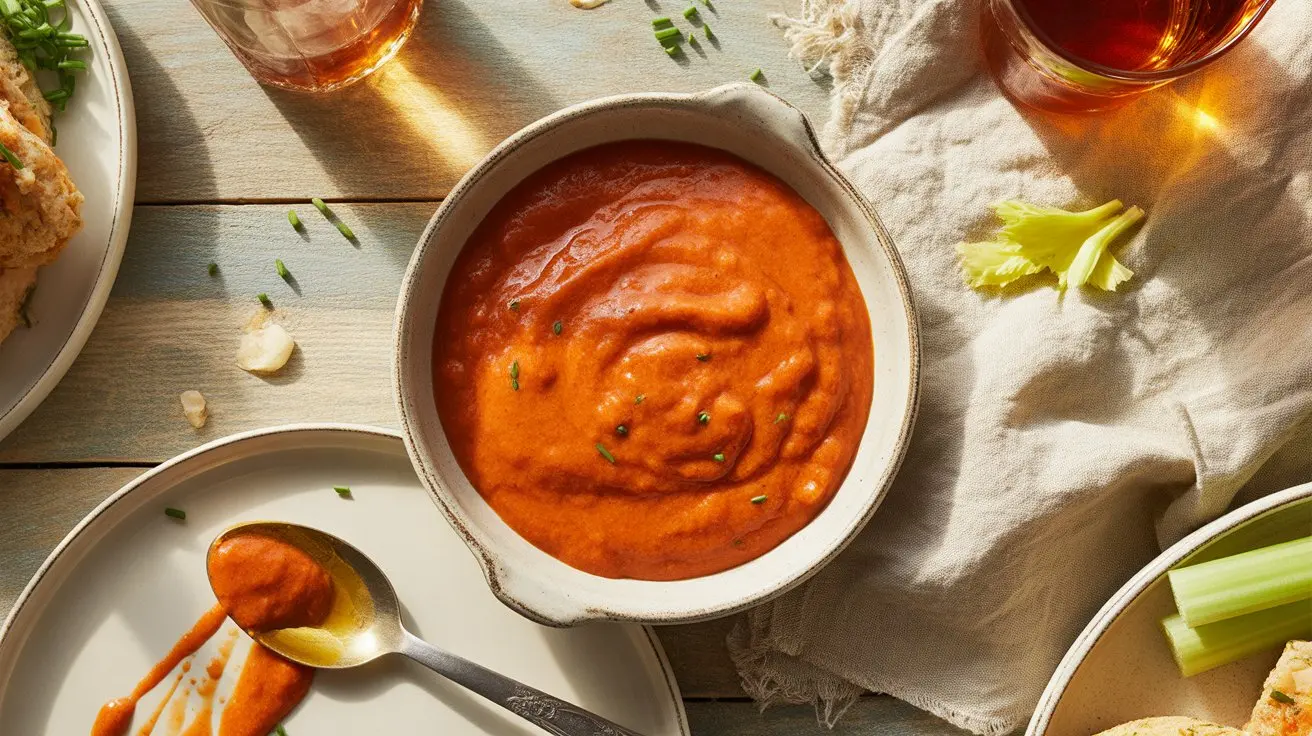
Buffalo Sauce
Classic buffalo wing sauce with just two main ingredients: hot sauce and butter. Find your perfect heat level.

What Makes Buffalo Sauce Different From Hot Sauce
Most people assume buffalo sauce and hot sauce are the same thing. They are not. Buffalo sauce is an emulsion — hot sauce whisked into melted butter until the two become a single, glossy, coating liquid. Hot sauce alone is thin and acidic. Buffalo sauce is rich, tangy, and clings to everything it touches.
The ratio is the whole game. Too much butter and you lose the heat and vinegar bite. Too little and the sauce breaks, turning greasy and thin. The classic formula is 2 parts hot sauce to 1 part butter, but every cook adjusts from there.
Choosing Your Hot Sauce Base
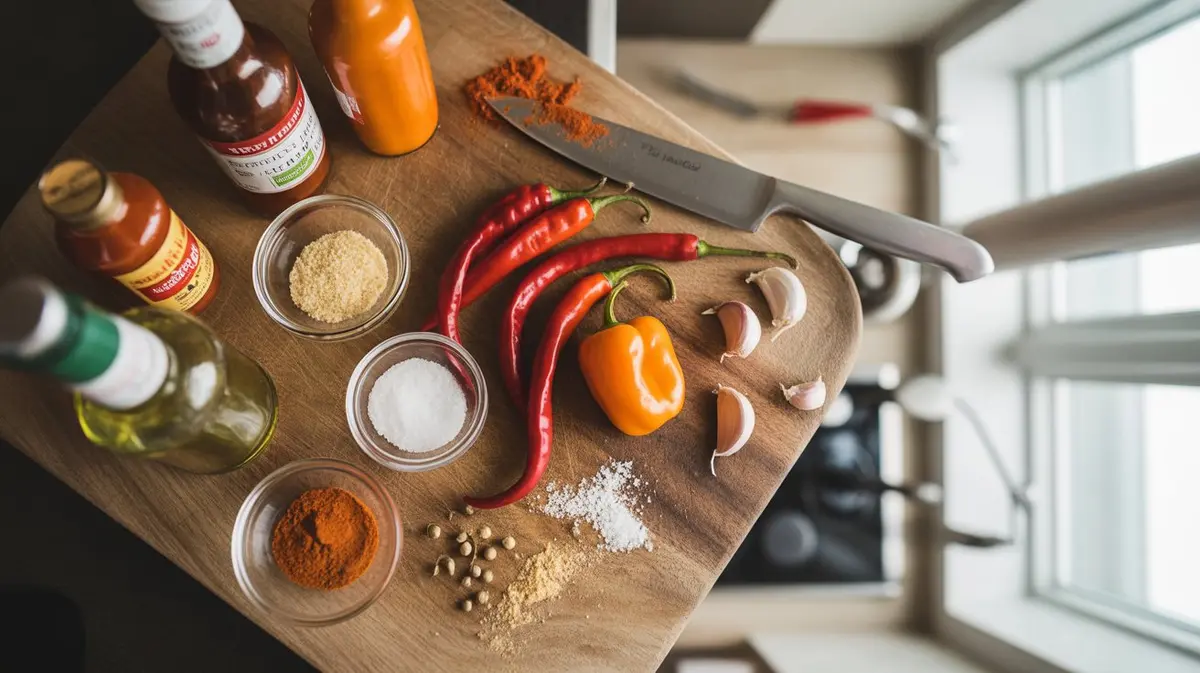
Frank's RedHot Original is the default, and for good reason — it's built on tabasco-family frutescens peppers that deliver a clean, vinegar-forward heat without overwhelming fruitiness. The 450 SHU baseline keeps the sauce accessible while still delivering real heat.
That said, swapping the base sauce changes everything. A sauce built on hot-tier cayenne-based sauces pushes the final product into genuinely spicy territory. For a milder result, look at mild-classified Louisiana-style sauces — they carry more vinegar and less capsaicin.
Crystal Hot Sauce and Louisiana Brand both work well as alternatives. They tend to be thinner and saltier than Frank's, so you may want to reduce the butter slightly to keep the emulsion tight.
Why Emulsions Break (and How to Fix Them)
If your sauce looks greasy or separated, the fat and water phases have split. This happens when the heat is too high, the butter goes in too fast, or the sauce sits too long off the whisk.
To rescue a broken sauce: remove from heat, let it cool for 60 seconds, then whisk in 1 teaspoon of cold water or an ice cube while whisking vigorously. The cold water gives the emulsion a reset point. This works about 80% of the time.
Prevention is easier than repair. Keep the heat low, add butter gradually, and use cold butter straight from the fridge rather than softened or melted.
Heat Level Variations
Buffalo sauce is not one fixed heat level — it's a spectrum. Here's how to dial it in:
- Mild buffalo: Use a mild-classification hot sauce as the base and increase butter to a 1:1 ratio with the sauce. Add a teaspoon of honey to round the edges.
- Classic medium: The standard 2:1 hot sauce to butter ratio with Frank's. This is the Anchor Bar original formula range.
- Hot buffalo: Keep the 2:1 ratio but add 1/2 teaspoon cayenne and swap to a hot-tier sauce base. Some cooks add a few dashes of a habanero-based sauce here.
- Extra hot: Use a extra-hot classified sauce as your base, or blend in a small amount of habanero mash. This version is not subtle — it will clear sinuses.
- Ghost pepper buffalo: Not traditional, but possible. A few drops of a super-hot tier extract or sauce goes a very long way. Start with 1/4 teaspoon and taste before adding more.
For the medium-hot range, adding a sauce made from cayenne's sharp, linear heat works better than habanero — the flavor profile stays cleaner and closer to the original.
Flavor Variations Beyond Heat
The classic formula is a starting point, not a ceiling.
- Garlic buffalo: Add 3-4 cloves of roasted garlic, mashed to a paste, whisked in with the butter. Deeper and less sharp than garlic powder alone.
- Honey buffalo: Whisk in 1-2 tablespoons of honey at the end. Cuts the acidity and adds a sticky glaze quality. Popular for oven-baked wings.
- Brown butter buffalo: Brown the butter first before whisking it in. Adds a nutty, toasty depth that changes the whole character of the sauce.
- Vegan buffalo: Replace butter with vegan butter or refined coconut oil. Coconut oil adds a faint sweetness; vegan butter is closer to the original texture.
- Smoky buffalo: Add 1/2 teaspoon smoked paprika and a dash of liquid smoke. Pairs well with the honey variation.
The smoky variation works particularly well with American-grown pepper hot sauces that already have a slightly earthy base note.
What to Use Buffalo Sauce On
Wings are the obvious answer, but the sauce is more versatile than its reputation suggests.
- Chicken wings: Toss immediately after frying or baking, while the wings are still hot. The heat helps the sauce adhere.
- Cauliflower: Roast florets at 425°F (220°C) until crispy, then toss in buffalo sauce. One of the better vegetable applications of any hot sauce.
- Buffalo shrimp: Toss grilled or pan-seared shrimp in the sauce right before serving. The sauce cooks onto the shrimp in about 30 seconds over high heat.
- Pizza base: Use in place of tomato sauce with mozzarella, chicken, and red onion.
- Dipping sauce: Thin slightly with extra hot sauce (not water — water kills the emulsion) for a looser dipping consistency.
- Grain bowls: Drizzle over roasted chickpeas, farro, and shredded cabbage for a fast weeknight bowl.
The Anchor Bar Origin
Buffalo sauce traces to the Anchor Bar in Buffalo, New York, in 1964. Teressa Bellissimo is credited with the original recipe — deep-fried wings tossed in butter and Frank's RedHot, served with celery and blue cheese dressing. The combination became a national phenomenon within two decades.
The recipe's staying power comes from its simplicity. There are no proprietary ingredients, no special equipment, and no technique that requires professional training. Anyone can make a version that rivals the original in about 10 minutes. That accessibility is exactly why it spread.
For a comparison of how different base peppers affect the final sauce character, the heat gap between cayenne and tabasco peppers explains a lot about why different hot sauce brands produce noticeably different buffalo sauces even at the same ratio.
Technique Tips
- Use a whisk, not a spoon. A spoon cannot create the mechanical action needed to emulsify fat into liquid.
- Warm the sauce first. Cold hot sauce added to cold butter will never emulsify properly. The sauce needs to be warm before butter goes in.
- Cold butter only. The temperature contrast between warm sauce and cold butter creates the emulsification window.
- Never boil after butter is added. Boiling forces the emulsion to break permanently.
- Salt at the end. Most hot sauces are already quite salty. Taste before adding any salt.
- Ratio flexibility: The 2:1 ratio is a starting point. Adjust by tablespoon until you find the texture and heat level that works for your application.
If you're making a large batch for a party, keep the finished sauce in a slow cooker on the warm setting, whisking every 20-30 minutes. It will hold for 2-3 hours without breaking if the temperature stays below 160°F (71°C).
Storage and Reheating
Buffalo sauce stores in the refrigerator for up to 2 weeks in a sealed container. It will solidify when cold — the butter fat sets just like any compound butter.
To reheat: place the container in warm water for a few minutes, or microwave in 10-second bursts, whisking between each interval. Do not microwave on high — you'll overheat the outside while the center stays cold, and the temperature differential breaks the emulsion.
Freezing is not recommended. The emulsion breaks on thaw and does not recover well even with vigorous whisking.
Made-from-scratch buffalo sauce does not last as long as the commercial bottled version because there are no stabilizers. The tradeoff is a noticeably fresher, cleaner flavor — particularly in the butter component, which goes stale faster in commercial versions.
Chef's Tip: The Resting Period
Patience is an ingredient. After mixing, let the dish rest for 10–15 minutes before serving. This allows the flavours to meld and the seasoning to fully penetrate. If making ahead, refrigerate and bring to room temperature before serving.
Shopping List
-
1/2 cup (120ml) Frank's RedHot Original or preferred hot sauce
-
1/4 cup (4 tablespoons) unsalted buttercold, cut into cubes
-
1 tablespoon white vinegar (optionalfor extra tang)
-
1/2 teaspoon garlic powder
-
1/4 teaspoon Worcestershire sauce
-
Pinch of cayenne pepper (optionalfor heat adjustment)
-
Salt to taste
Full Recipe Instructions
Pour the hot…
Pour the hot sauce into a small saucepan. Heat over medium-low until it just begins to simmer.
Reduce heat to…
Reduce heat to low. Add cold butter cubes two at a time, whisking constantly after each addition.
Once all butter…
Once all butter is incorporated and the sauce looks glossy and uniform, whisk in the garlic powder and Worcestershire sauce.
Taste. Add the…
Taste. Add the optional white vinegar for more acidity, or a pinch of cayenne for more heat.
Remove from heat.…
Remove from heat. Use immediately, or keep warm over the lowest possible heat, whisking occasionally. Do not let it boil after the butter is in.
Toss with wings,…
Toss with wings, drizzle over cauliflower, or use as a dipping sauce.
Frequently Asked Questions
-
The classic ratio is 2 parts hot sauce to 1 part butter. For a milder, richer sauce increase the butter; for a sharper, hotter result keep the butter at or below the standard ratio.
-
The emulsion broke, usually from too-high heat or butter added too fast. Rescue it by removing from heat, cooling briefly, then whisking in 1 teaspoon of cold water or an ice cube while whisking vigorously.
-
Yes. Vegan butter works as a near-identical substitute and produces the same emulsified texture. Refined coconut oil also works but adds a faint sweetness that shifts the flavor profile slightly.
-
Up to 2 weeks in a sealed container. It will solidify when cold due to the butter fat, but reheats successfully in short microwave bursts with whisking between each interval.
-
Frank's RedHot Original is the traditional choice because its vinegar-forward flavor and moderate heat balance well with butter. Crystal and Louisiana Brand are solid alternatives, though both are thinner and saltier than Frank's.
More Recipes
View allFresh Salsa Recipe
Restaurant-quality fresh salsa in 10 minutes. Proper tomato prep, right jalapeño amount, and the secret to balanced flavor. Find your perfect heat level.
Jalapeno Poppers Recipe
Classic cream cheese stuffed jalapeño poppers that are crispy outside, creamy inside. Find your perfect heat level.
Pickled Jalapenos Recipe
Two methods: 10-minute quick pickle and proper fermented. Both stay crispy. Find your perfect heat level.
Stuffed Peppers Recipe
Classic stuffed peppers with rice and meat, plus vegetarian and Mexican variations. Covers bell peppers, poblanos, and which peppers stuff best.