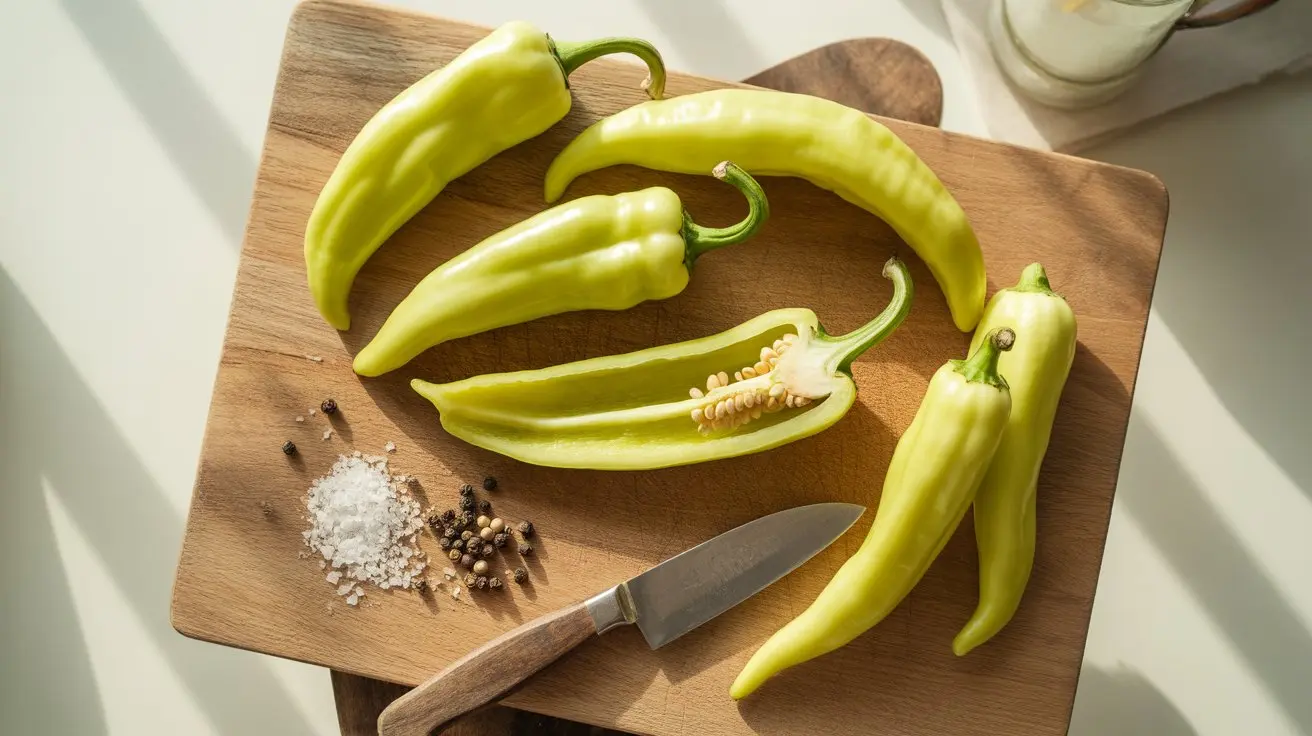
Banana Pepper

The banana pepper tops out at just 500 SHU — essentially zero heat — with a bright, tangy flavor that makes it one of the most approachable peppers in any kitchen. Mild enough for heat-sensitive eaters, it still brings real character to sandwiches, pickles, and roasted dishes. A staple of American home gardens and deli counters alike.
- Species: C. annuum
- Heat tier: Mild (0–999 SHU)
What is Banana Pepper?
The first time I bit into a raw banana pepper straight from the garden, the tanginess caught me off guard — more like a mild vinegar note than anything I expected from a fresh pepper. That brightness is the whole point.
Banana peppers (Capsicum annuum) register between 0 and 500 SHU on the Scoville unit scale, placing them firmly in the mild heat category alongside peppers that prioritize flavor over fire. The name comes from their shape and color — elongated, curved, and ripening from pale yellow to orange-red.
Flavor-wise, expect a clean tang with subtle sweetness, especially when the pepper is picked young and yellow. As it matures toward red, the sweetness deepens and the tanginess softens. Raw, they have a satisfying crunch. Roasted, they turn silky and almost fruity.
These belong to the same C. annuum botanical family as bell peppers, jalapeños, and hundreds of other varieties — one of the most genetically diverse pepper species. Banana peppers are widely cultivated across the U.S. and appear in grocery stores, farmers markets, and home gardens in equal measure.
Their mild profile makes them genuinely flexible. Unlike hotter peppers where heat management becomes the main concern, banana peppers let you focus entirely on how their flavor interacts with other ingredients.
History & Origin of Banana Pepper
Banana peppers are a product of American horticulture, developed and popularized in the United States during the 20th century. While C. annuum peppers originated in the Americas thousands of years ago — with wild ancestors traced to Bolivia and Mexico — the banana pepper as a distinct cultivar was shaped by commercial breeding programs focused on mild, productive, easy-to-pickle varieties.
By the mid-20th century, banana peppers had become fixtures in American deli culture, particularly in the Northeast and Midwest, where pickled pepper rings on subs and hoagies became standard. The pepper's pale yellow color and curved shape gave it the name that stuck.
They are sometimes confused with pepperoncini, which share similar growing characteristics but carry a slightly different flavor and texture. Both became popular in the American pickling tradition, often appearing side by side in jars at grocery stores. Today, banana peppers remain one of the most commonly grown home garden peppers in the U.S.
How Hot is Banana Pepper? Heat Level & Flavor
The Banana Pepper delivers 0–500 Scoville Heat Units, placing it in the Mild tier (0–999 SHU).
Flavor notes: mild and tangy.
Banana Pepper Nutrition Facts & Health Benefits
A 100g serving of raw banana peppers contains roughly 27 calories, making them one of the lowest-calorie vegetables you can add to a meal. They deliver a solid dose of vitamin C — around 95mg, which covers more than 100% of the daily recommended intake — along with vitamin B6, folate, and potassium.
Fiber content is modest at about 2g per 100g, and they are virtually fat-free. The capsaicin content at 0–500 SHU is negligible, meaning none of the metabolic effects associated with hot peppers apply here. Their nutritional value comes primarily from antioxidants and micronutrients rather than any heat-related compounds.
Best Ways to Cook with Banana Peppers
Pickling is where banana peppers truly shine. Their firm walls, mild tang, and low moisture content make them ideal for quick pickles and long-fermented jars alike. Pickled banana pepper rings on sandwiches, pizza, and grain bowls are a staple for good reason — the acidity cuts through rich ingredients without adding heat.
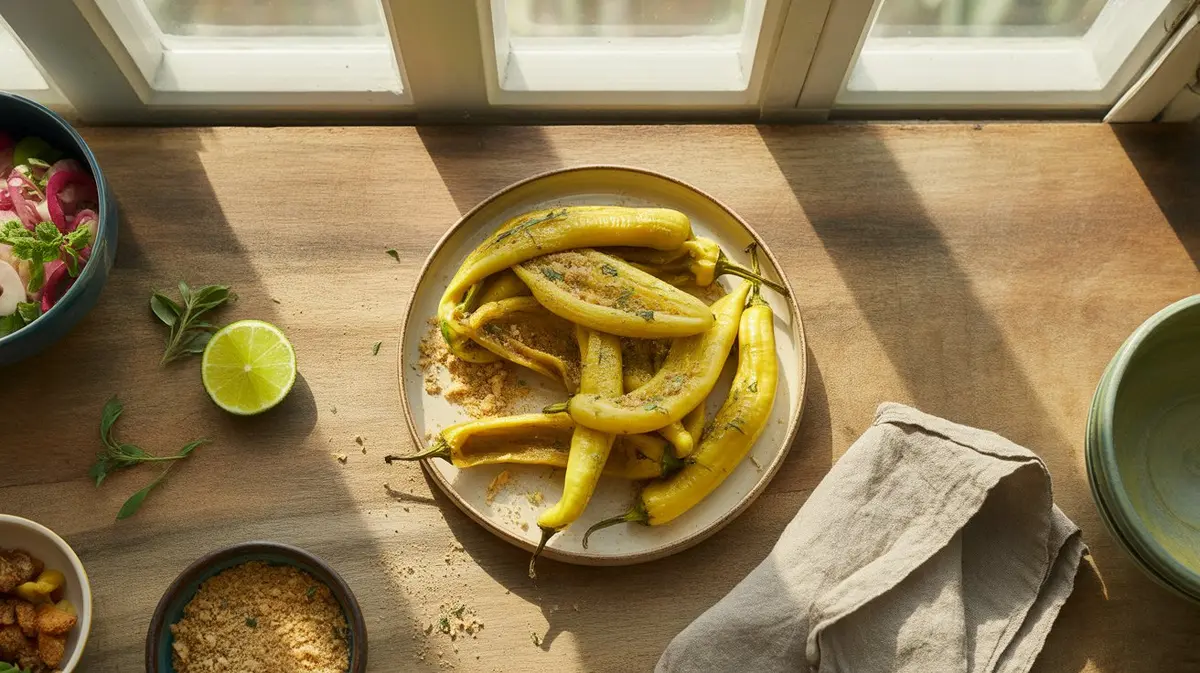
Raw, sliced thin, they add crunch and brightness to salads and slaw. Roasting concentrates their sweetness and softens the skin into something almost jammy — excellent layered into flatbreads or stirred into a shakshuka with a step-by-step approach.
For cooked applications, banana peppers work well stuffed with cheese, rice, or ground meat and baked until tender. Their walls are thick enough to hold a filling but thin enough to cook quickly. They also blend smoothly into sauces — try them in a homemade harissa preparation for a mild, tangy base that pairs with roasted vegetables or grilled proteins.
Compared to the sweet, deeply rooted Southern European character of pimento, banana peppers bring more acidity. They substitute well in most mild pepper applications, though their tang is more pronounced than a bell pepper and less fruity than some Italian varieties.
Where to Buy Banana Pepper & How to Store
Fresh banana peppers should feel firm with smooth, unblemished skin. Avoid any with soft spots, wrinkling, or dull coloring — these indicate age. Yellow peppers are at peak tanginess; orange-red ones are sweeter.
Refrigerate fresh peppers unwashed in a produce bag for up to 1 week. Pickled banana peppers keep for 3 to 4 weeks in the refrigerator after opening. For longer storage, roast and freeze them flat on a sheet pan before transferring to a bag — they hold well for up to 6 months and thaw quickly for cooked applications.
Jarred pickled rings are widely available year-round at most grocery stores.
Best Banana Pepper Substitutes & Alternatives
Whether you ran out of banana pepper or just want to try something different, these peppers make solid stand-ins. We picked them based on heat range, flavor overlap, and how well they actually work in the same dishes.
Our top pick: Pepperoncini (100–500 SHU). Same species (C. annuum) and nearly the same heat, so it swaps in at a 1:1 ratio without changing the character of the dish. The flavor leans tangy and mild, which is close enough that most people won’t notice the difference in a cooked recipe.
How to Grow Banana Peppers
Banana peppers are forgiving plants — a good starting point if you want a step-by-step growing guide to work from. They thrive in full sun with consistent moisture and warm soil, performing best where daytime temperatures stay between 70°F and 85°F.
Start seeds indoors 8 to 10 weeks before the last frost date. Transplant once nighttime temperatures stay reliably above 55°F — cold soil stunts early growth noticeably. Space plants 18 to 24 inches apart; crowding invites disease and reduces air circulation.
Fertilize at transplant with a balanced formula, then switch to a lower-nitrogen feed once flowering begins. Too much nitrogen pushes leafy growth at the expense of fruit set.
Days to maturity typically run 70 to 75 days from transplant. Harvest at yellow for maximum tang, or leave on the plant until orange-red for sweeter, milder flavor. Unlike the completely heatless, sweet Italian character of Jimmy Nardello, banana peppers hold a slight sharpness at any stage.
Pests to watch: aphids and pepper weevils. A strong spray of water handles most aphid pressure early. In humid climates, powdery mildew can appear late in the season — good airflow and avoiding overhead watering help significantly.
Frequently Asked Questions
-
They are closely related but not identical. Banana peppers tend to be slightly larger, milder, and more tangy, while pepperoncini are often a bit wrinklier with a slightly more bitter edge. Both fall in the 0–500 SHU range, which is why they get swapped in recipes regularly.
-
Technically yes, but at 0–500 SHU the heat is imperceptible to most people. Even heat-sensitive eaters rarely notice any warmth — the flavor registers as tangy and slightly sweet rather than spicy.
-
Color indicates ripeness: yellow peppers are harvested early and carry more tanginess and crunch, while red ones are fully mature with increased sweetness and a softer texture. Both are edible and useful, just different in flavor balance.
-
Yes, with one caveat — banana peppers are tangier and thinner-walled than bell peppers, so they cook faster and add more acidity. In raw applications like salads or sandwiches the swap works seamlessly; in stuffed pepper recipes, reduce cooking time slightly.
-
Pickling concentrates the pepper's natural acidity and infuses brine flavors — vinegar, salt, and often garlic or dill — into the flesh. The cell structure softens during pickling, which releases more flavor compounds and makes the tang much more pronounced than in a raw pepper.
- Capsicum annuum Species Overview — Chile Pepper Institute, NMSU
- Banana Pepper Production — University of Florida IFAS Extension
- Vitamin C in Peppers — USDA FoodData Central
Species classification: C. annuum — based on published botanical taxonomy.