What Is Berbere? Flavor, Heat, Ingredients, and Uses
Berbere is a red, chile-led spice blend central to Ethiopian and Eritrean cooking. Formulas vary, but many combine dried chile with aromatic seeds, warm spices, ginger, and savory seasonings for heat and depth.
Berbere is a red spice blend built around dried chile and used throughout Ethiopian and Eritrean cooking. It is a family of formulas, not one fixed ingredient list.
A good blend carries more than heat. Toasted seeds, warm spices, ginger, garlic, and the chosen chile create layers that can taste earthy, fragrant, sweet-toned, sharp, or fiery.
What Is Berbere?
Berbere functions as both a foundational seasoning and a recognizable flavor identity. It gives color, pungency, and aromatic depth to stews, legumes, meats, sauces, and condiments.
The blend is most often sold as a fine red powder, though cooks can combine it with liquid and fat to make a paste. Powder and paste share the same identity, but they distribute and brown differently.
Direct answer: berbere is a chile-forward spice blend whose exact heat and aroma depend on the peppers, supporting spices, ratios, and preparation.
A survey led by the Ethiopian Public Health Institute across 16 Ethiopian localities documented the flexible structure directly. Producers varied the raw materials, added spices, and processing stages according to locality, preference, availability, and household practice.
What Is Berbere Made Of?
Reading berbere by functional layer is more useful than memorizing one recipe. Each group changes a different part of the eating experience.
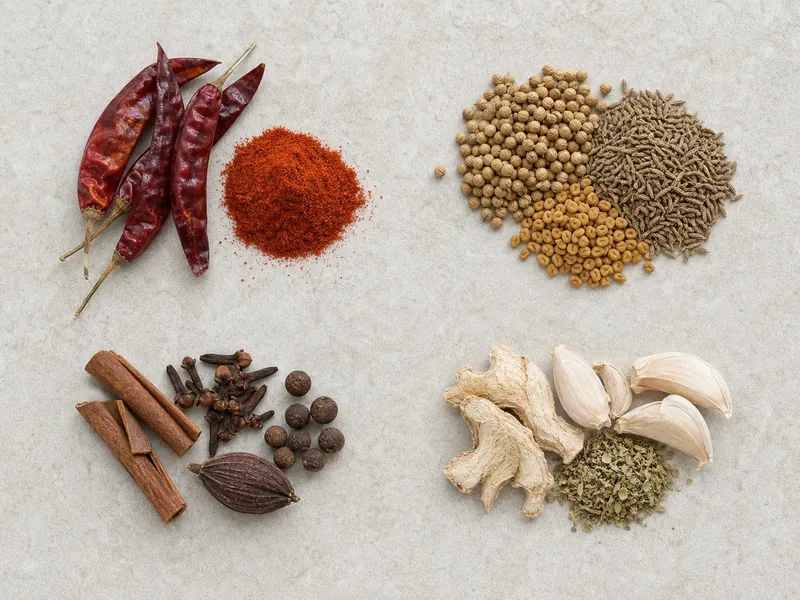
| Flavor layer | Common examples | What the layer does |
|---|---|---|
| Chile base | Dried red chile, paprika, cayenne | Builds red color, fruit character, and most of the heat |
| Aromatic seeds | Coriander, cumin, fenugreek | Adds citrusy, earthy, nutty, or lightly bitter depth |
| Warm spices | Clove, cinnamon, allspice, nutmeg, korarima | Creates sweet-toned fragrance without adding sugar |
| Savory accents | Ginger, garlic, onion, herbs, salt | Sharpens aroma and connects the blend to the dish |
Korarima, sometimes called Ethiopian cardamom, is not the same spice as green cardamom. A blend that names it may carry a darker, smoky-herbal note that a green-cardamom substitution will not copy exactly.
Salt is optional rather than defining. A salted commercial seasoning needs different dosing from a salt-free spice blend because every extra spoonful also changes the dish's salinity.
Why Do Berbere Blends Taste So Different?
Two jars can both be berbere and still differ sharply. The chile variety, chile-to-aromatic ratio, seed toast, grind size, salt, and age all affect the result.
| Formula choice | Likely effect | What to check |
|---|---|---|
| More paprika, less cayenne | Redder and usually gentler, with more sweet-pepper body | Whether the paprika is sweet, hot, or smoked |
| More pungent dried chile | Stronger heat and a more pepper-led finish | The named chile or a heat statement |
| Whole spices toasted before grinding | Brighter roasted aroma when fresh and carefully toasted | Roast date or vivid fragrance |
| Heavy clove or fenugreek | More assertive warm bitterness | Ingredient order and first aroma |
| Added salt | Ready-seasoning convenience with less control | Sodium and salt position on the label |
This variability is part of the blend's identity. It does mean that a recipe measured with one brand may need less or more when another jar is used.
Smoked paprika can add a smoke note, but smoke is not required for berbere. Check the ingredient list rather than assuming every deep-red blend will taste smoky.
What Does Berbere Taste Like, and How Hot Is It?
Berbere commonly tastes chile-forward, earthy, warm, and aromatic. Coriander may add a citrus edge, fenugreek a maple-like bitterness, and clove or cinnamon a sweet-smelling lift.
The blend has no single Scoville rating because it is not one pepper cultivar. Paprika-heavy versions can be gentle, while formulas built with more cayenne or another pungent chile can become forceful quickly.
- Immediate sharp heat often points to a larger share of pungent ground chile.
- Slow aromatic warmth reflects the combined effect of chile and warm spices.
- Harsh bitterness can come from too much clove or fenugreek, stale powder, or spices scorched in the pan.
- Flat red dust signals weak aroma even when the color still looks strong.
Taste a new jar in a controlled amount before seasoning a full pot. Color cannot reveal the chile ratio, and red paprika can make a mild blend look hotter than it is.
What Is Berbere Used For in Ethiopian Cooking?
Berbere is not limited to a finishing shake. In Ethiopian cooking it can season a slow onion base, color a lentil stew, or become a separate condiment after it is mixed with liquid.
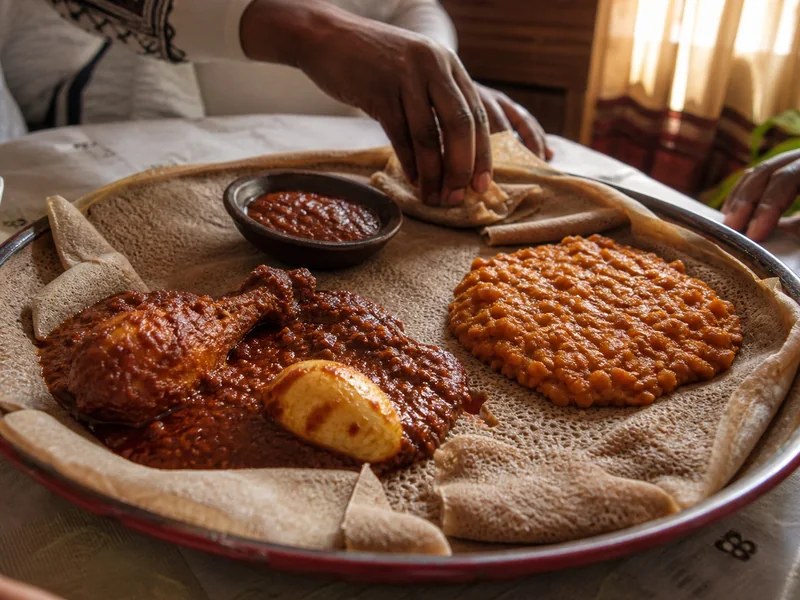
Doro wat cooks the blend into an onion base
A doro wat recipe from the University of Florida Center for African Studies begins by cooking finely minced onion, then adds oil, tomato, garlic, berbere, and niter kibbeh before the chicken. The listed half cup of berbere shows that the blend helps build the stew rather than sitting on top as a garnish.
The Smithsonian catalog for Yohanis Gebreyesus's book Ethiopia likewise identifies doro wat as chicken stewed with berbere spice. The onion, fat, and long cooking soften raw spice edges while spreading chile color and aroma through the sauce.
Misir wat carries the same red-spice principle into lentils
Oberlin College's account of misir wat uses berbere with red lentils. The amount can move with the blend's heat, but the practical role stays consistent: berbere supplies the red chile and aromatic structure while the lentils supply the body.
Awaze changes dry seasoning into a wet condiment
Awaze shows a different role for the same spice family. Mixing berbere into a wet base turns loose powder into a condiment that clings to food, so its heat and aroma reach the eater more directly than they do after a long simmer.
These uses also explain why one fixed tablespoon recommendation cannot fit every dish. The cook has to account for the blend's heat, the volume of the base, and whether the spice will simmer, bloom briefly, or remain close to the surface.
How Do You Choose a Good Berbere Blend?
A useful label names recognizable chile and spice components instead of hiding the entire formula behind spices. Ingredient order also helps reveal whether chile, paprika, salt, or another filler leads the blend.
- Check the chile base. Named peppers or a heat statement make dosing easier.
- Look for aromatic structure. Coriander, cumin, fenugreek, ginger, and warm spices should support the chile.
- Find the salt. Choose salt-free when you want full control in a stew or rub.
- Smell before judging color. Fresh berbere should release chile and spice aroma as soon as the container opens.
- Buy a useful amount. A smaller fresh jar usually beats a large container that fades before it is used.
Darkening alone does not prove spoilage, and bright red does not prove freshness. Moisture, mold, an off odor, or clumping caused by damp storage are stronger reasons to discard the blend.
Should You Bloom Berbere or Use It Dry?
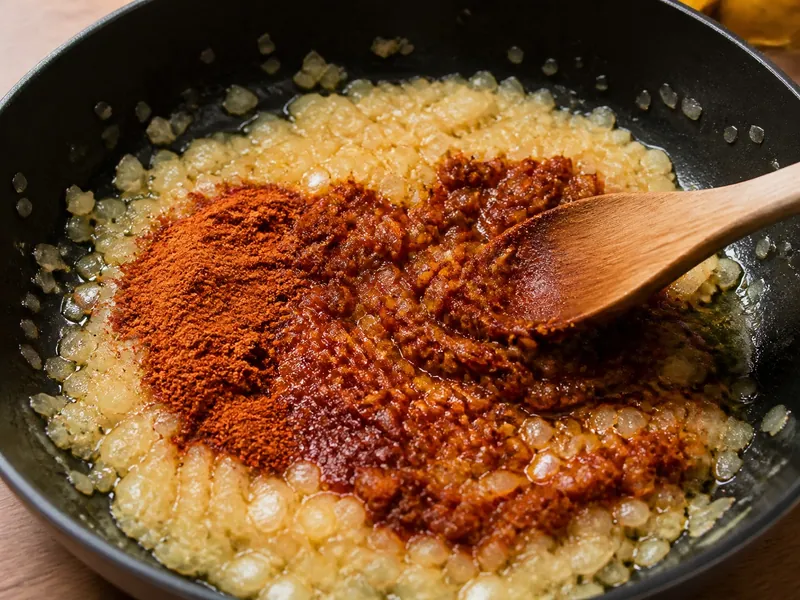
Cooking method determines which layer reaches the eater first. Gentle blooming in fat releases aromatic compounds, while dry application keeps more of the powder on a food's surface.
| Method | What happens | Good starting applications |
|---|---|---|
| Bloom in fat | Aroma spreads through the cooking medium | Onion bases, lentils, braises, stews |
| Stir into liquid | Heat and spice disperse through a sauce | Tomato sauces, soups, simmered beans |
| Mix into a paste | Seasoning clings to food and hydrates before cooking | Marinades, awaze-style condiments, roasting pastes |
| Apply dry | Flavor stays concentrated near the surface | Roasted vegetables, grilled meat, crisp chickpeas |
| Add near the end | Fresh top notes remain more noticeable | Finishing yogurt, butter, dips, seasoning correction |
Doro wat and misir wat show how berbere can shape a long-cooked sauce or lentil stew. The blend also works beyond those dishes when the cook respects its chile, warm spice, and toasted-seed structure.
Ground spices can scorch quickly. Keep the heat moderate, use enough fat or liquid, and move the mixture once the aroma opens rather than waiting for the powder to blacken.
What Can You Substitute for Berbere?
Generic chili powder is not a direct replacement because it may contain cumin, garlic, oregano, and salt in ratios designed for a different cuisine. Curry powder can supply warm spice but may shift the blend toward turmeric and omit the chile structure berbere needs.
For an emergency approximation, combine paprika for body, cayenne for heat, ground coriander and cumin for the seed layer, then add small amounts of ginger, fenugreek, cinnamon, clove, or allspice. Build the layers first, then adjust heat.
| If the dish needs | Start with | Main limitation |
|---|---|---|
| Red color and moderate warmth | Paprika plus a little cayenne | Missing seed and warm-spice depth |
| Earthy aromatic body | Coriander, cumin, and a small amount of fenugreek | Missing chile heat and color |
| Warm fragrance | Tiny amounts of cinnamon, clove, or allspice | Easy to overpower the blend |
No shortcut becomes identical to a specific household or commercial formula. The goal is to preserve the dish's heat, aroma, and savory balance until real berbere is available.
How Should You Store and Dose Berbere?
Store berbere airtight, cool, dry, and away from direct light. Ground chile and aromatics lose intensity with air, heat, and repeated moisture exposure.
- Start below the recipe amount when the jar or heat level is unfamiliar.
- Bloom a measured portion in fat or the wet base without scorching it.
- Let it disperse before deciding that the dish needs more.
- Adjust salt separately unless the blend is confirmed salt-free.
- Finish for aroma with a small fresh addition when the dish needs lift rather than more cooked depth.
If a stew becomes too hot, increase the unsalted base rather than trying to cover the burn with more spices. If it tastes dusty, a small fresh bloom may help, but a stale jar cannot recover its original fragrance.
What Is Berbere? Flavor, Heat, Ingredients, and Uses FAQ
- In Vitro Antioxidant and Hypoglycemic Activities of Ethiopian Spice Blend Berbere
- Production Stages of Berbere (Pepper Powder) in Ethiopia
- Spice Germplasm in Ethiopia
- Forest Spice Development: The Use of Value Chain Analysis to Identify Opportunities for the Sustainable Development of Ethiopian Cardamom (Korerima)
- Ethiopia: Recipes and Traditions from the Horn of Africa - Smithsonian Libraries
- Doro Wot - University of Florida Center for African Studies
- True Connections: Misir Wat - Oberlin College