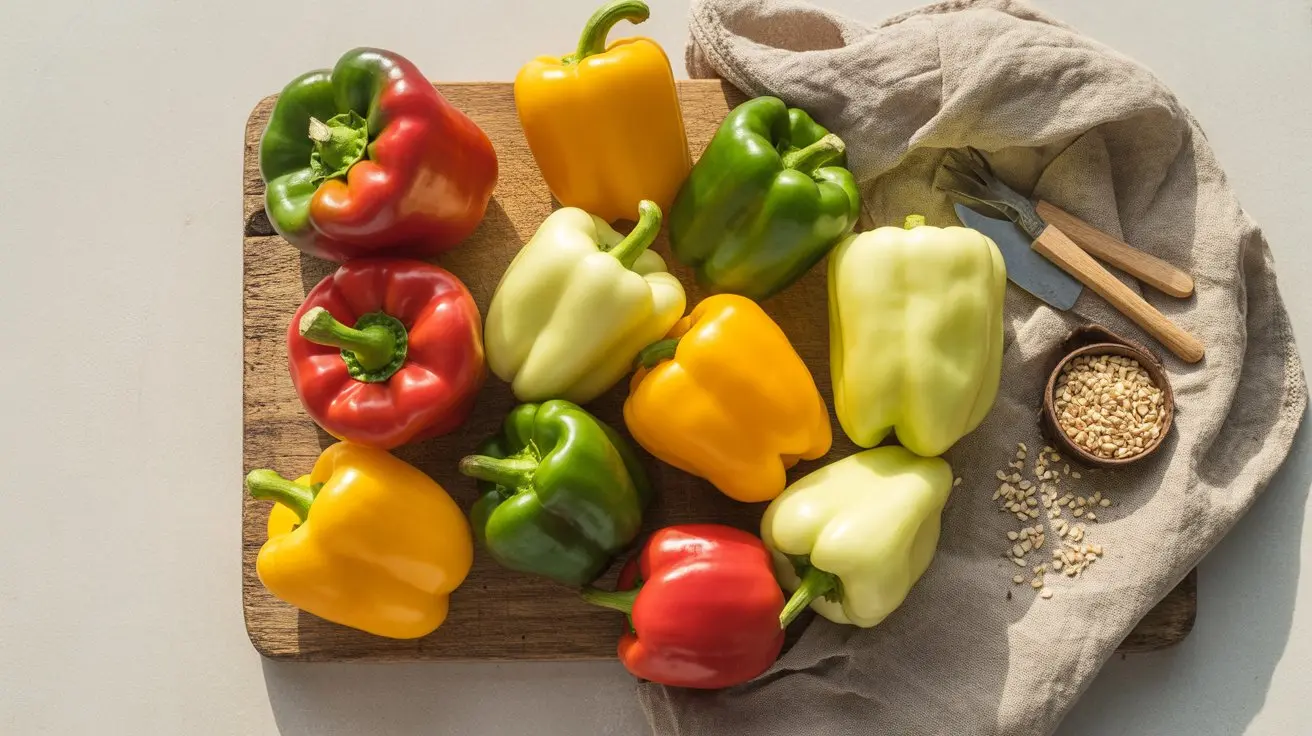
Pepper Sunscald
White or tan patches on pepper fruit are sunscald from direct sun exposure. Prevent with shade, companion planting, pruning. Find your perfect heat level.
What Sunscald Actually Looks Like
Those pale, papery patches on your pepper fruit are not a disease. Sunscald is a physiological disorder caused by direct ultraviolet and infrared radiation hitting fruit tissue that isn't acclimatized to intense sun exposure.
The damage shows up as white, tan, or light yellow patches on the sun-facing side of the fruit. As it progresses, the affected skin turns papery and may collapse inward, leaving a sunken, leathery spot that secondary molds love to colonize.
The fruit is still edible if you cut away the damaged area promptly, but left on the plant, sunscald lesions become entry points for Botrytis and other fungal pathogens that will ruin the entire pepper.
Why Peppers Scald in the First Place
Pepper fruit lacks the protective mechanisms that leaves use to manage sun intensity. When foliage is removed — by pruning, wind damage, or pest pressure — previously shaded fruit gets suddenly exposed to full sun.
Temperatures at the fruit surface can spike dramatically. Research from university extension programs shows that fruit surface temps can exceed air temperature by 10-15°F in direct afternoon sun, pushing tissue beyond its tolerance threshold.
The damage is essentially a localized burn. The cells in the outer mesocarp lose water faster than roots can replace it, the cell walls collapse, and pigment production halts — which is why the patch stays pale even as the rest of the fruit ripens.
Thin-walled varieties like the elongated, mildly pungent cowhorn type and large-fruited sweet peppers are particularly vulnerable because their surface area-to-wall ratio means less thermal mass to buffer heat spikes.
The Three Main Triggers
Understanding what causes sunscald makes prevention straightforward. There are three scenarios that account for most cases home growers encounter.
- Aggressive pruning: Removing too much foliage at once exposes fruit that developed under a canopy. The transition from shade to full sun is abrupt and the fruit has no time to adapt.
- Transplant shock: Moving plants from a greenhouse or indoor setup directly into full outdoor sun without a hardening-off period. The fruit and foliage alike are unprepared for UV intensity.
- Wind and pest defoliation: Aphid infestations, bacterial leaf spot, or strong storms can strip protective leaves mid-season, leaving fruit exposed at the worst time — peak summer heat.
Geographic location matters too. Growers in the Southwest or at elevation deal with UV index levels that are simply more intense than coastal or northern climates, and peppers need more deliberate shading to compensate.
Diagnosing Sunscald vs. Other Problems
Before treating for sunscald, confirm that is actually what you are dealing with. Several other issues produce pale or discolored patches on pepper fruit.
Calcium deficiency (blossom end rot) hits the bottom of the fruit, not the sun-facing side, and the tissue turns dark and leathery rather than pale. Bacterial soft rot produces water-soaked lesions that smell foul and spread quickly. Phytophthora blight creates dark, greasy-looking spots that move fast across the fruit surface.
Sunscald is almost always on the side facing the afternoon sun, the patch is dry rather than wet, and it appears after a weather event — a heat wave, a pruning session, or a wind storm that stripped leaves.
Varieties with naturally thin canopies, like the intensely hot fiery, thin-fruited Thai Dragon type, can show sunscald even without aggressive pruning simply because the plant architecture leaves fruit exposed by default.
Step-by-Step Prevention Methods
Three approaches work reliably. Use them in combination during peak summer heat for best results.
- Shade cloth installation: A 30-40% shade cloth suspended 12-18 inches above the plant canopy reduces surface fruit temperature significantly without cutting enough light to hurt yield. Install it before temperatures consistently hit 90°F, not after damage appears. Knitted poly shade cloth is preferable to woven because it allows airflow.
- Companion planting for canopy cover: Tall companions like corn, sunflowers, or trellised pole beans on the west side of your pepper beds block the most damaging afternoon sun. This works especially well for varieties with naturally open growth habits. Taller pepper varieties — some cowhorn types reach 3 feet — can shade shorter neighbors naturally.
- Pruning strategy adjustment: Never remove more than one-third of the foliage at a single session. If you need to prune heavily for disease management or airflow, do it in stages over two to three weeks. Morning pruning allows cut surfaces to callous before afternoon heat peaks.
A fourth technique worth knowing: kaolin clay spray applied to fruit creates a physical barrier that reflects UV radiation and reduces surface temperature. It washes off with rain and needs reapplication, but it is a legitimate tool for high-UV environments.
Hardening Off — The Most Overlooked Prevention Step
Most sunscald on transplants is entirely preventable with a proper hardening-off protocol. Plants grown indoors or in a greenhouse have acclimated to diffuse light, and their fruit tissue cannot handle the abrupt shift to outdoor intensity.
Start with 2-3 hours of morning sun (before 10 a.m.) for the first three days. Increase exposure by 90 minutes each subsequent day. Keep plants out of direct afternoon sun for the first two weeks outdoors entirely.
This is especially critical for varieties that fruit early or that you've started from seed indoors — the full seed-to-harvest process is covered in the complete seed-starting and growing guide if you want to build this into your workflow from the beginning.
Cloudy days don't count as hardening exposure. UV penetrates cloud cover, but the thermal load is lower, which gives a misleading impression that plants are ready for full sun when they are not.
What to Do After Sunscald Appears
Once damage shows up, the goal shifts from prevention to damage control. The scalded tissue will not recover, but you can stop the situation from getting worse.
First, provide immediate shade — even a bedsheet draped over the plant for a few days buys time. Then assess whether the affected fruit is salvageable. Small patches less than an inch across on a large fruit can be cut away at harvest with no loss of quality to the rest.
Remove any fruit where the scalded area has turned dark, developed a foul smell, or shows visible mold growth. These are already colonized by secondary pathogens and will spread spores to healthy fruit if left in place.
Do not fertilize heavily after sunscald appears. A nitrogen push encourages lush new foliage, which sounds helpful, but the flush of soft growth that follows is more susceptible to both further sunscald and disease pressure. Steady, moderate fertility is the right call.
Varieties More Prone to Sunscald
Fruit size, wall thickness, and plant architecture all influence susceptibility. Large-fruited, thin-walled types are highest risk. Bell-type peppers and Italian frying peppers are classic examples because their canopy often can't cover all the fruit they set.
The sweet, early-maturing Gypsy type is a good example of a productive variety that benefits from some afternoon shading specifically because it sets heavy fruit loads that the canopy struggles to cover fully.
At the other end of the spectrum, super-hot varieties like the wrinkled, extreme-heat 7 Pot Brain Strain and the intensely fruity 7 Pot Barrackpore tend to have denser, more protective canopies and smaller individual fruits, which naturally reduces sunscald risk — though they are not immune, especially in high-UV growing regions.
The blistering-hot Naga Viper is another variety where the relatively small fruit and dense foliage provide some inherent protection, though growers in full-sun beds still report occasional scalding on the most exposed fruit.
Soil Moisture and Sunscald — The Connection Growers Miss
Water stress amplifies sunscald damage significantly. When roots can't deliver moisture fast enough, fruit tissue loses its turgor pressure, making it more vulnerable to heat-related cell collapse.
Consistent soil moisture — not wet, not dry, but steady — is protective. Mulching with 3-4 inches of straw or wood chips reduces soil temperature, retains moisture, and buffers the root zone against the same heat spikes that cause surface damage.
Drip irrigation timed to run in the early morning keeps root zone moisture stable through peak afternoon heat. Overhead watering in afternoon heat is counterproductive — wet foliage under intense sun can cause its own minor scalding on leaves, and the water evaporates before reaching roots effectively.
If you are growing in containers, sunscald risk is higher because container soil heats up faster and dries out more quickly than in-ground beds. Dark-colored containers absorb more heat; switching to light-colored or insulated containers reduces root zone temperature and moisture loss simultaneously.
Season-Long Management Strategy
Sunscald is not a single-intervention problem. It requires consistent attention through the growing season because conditions change — heat waves arrive, storms strip leaves, and heavy fruit sets shift the balance between canopy cover and exposed fruit.
Check your plants after any major weather event. If a storm stripped leaves or broke branches, assess what fruit is now exposed and provide shade immediately. The damage window after sudden exposure is short — a few hours of intense afternoon sun can cause visible scalding.
Late-season management matters too. As plants age, lower leaves naturally yellow and drop, reducing canopy density. This is normal, but it means fruit that was shaded in July may be exposed in September. A quick assessment every two weeks through peak season catches these shifts before damage accumulates.
For growers interested in the broader picture of what makes peppers tick — from the chemistry behind their heat to why some varieties handle stress better than others — the capsaicin receptor science and compound chemistry guide gets into why pepper biology responds the way it does to environmental stress.
Quick Reference: Sunscald Prevention Checklist
- Install 30-40% shade cloth before temperatures hit 90°F consistently
- Harden off transplants over 10-14 days before full sun exposure
- Never remove more than one-third of foliage in a single pruning session
- Mulch beds with 3-4 inches of organic material to stabilize root zone moisture
- Use drip irrigation timed for early morning delivery
- Plant tall companions on the west side of pepper beds for afternoon shade
- Inspect plants after storms for newly exposed fruit
- Consider kaolin clay spray for high-UV growing regions
- Switch to light-colored containers if growing in pots
Sunscald is one of the more frustrating problems to encounter mid-season because the damage is visible and immediate. But it is also one of the most preventable issues in pepper growing once you understand the mechanics behind it.
Frequently Asked Questions
-
Yes, if the damaged area is still dry and firm you can cut it away and use the rest of the pepper normally. Discard the fruit if the scalded patch has turned dark, softened, or developed any mold growth.
-
No, sunscald is not contagious — it is a physical injury, not a disease. However, the damaged tissue can be colonized by secondary fungal pathogens that do spread, so removing badly affected fruit promptly is important.
-
A 30-40% shade cloth is the standard recommendation for peppers. Higher density cloths reduce light too much and can hurt fruit set and ripening, especially for varieties that need high heat accumulation.
-
The undamaged portions of the fruit will continue to ripen normally. The scalded patch itself will not change color or texture and will remain pale and papery while the rest of the pepper reaches full maturity.
-
Yes, growers in high-elevation regions and the American Southwest deal with more intense UV radiation and report higher sunscald incidence. Hot, dry climates that combine high UV with low humidity and water stress are the most challenging conditions.