Pepper Plants Wilting: How to Tell Thirst From Root Trouble
A wilting pepper plant is a water-flow problem, but that does not always mean dry soil. Check soil moisture, pot weight, time of day, and root smell before you water again.
Pepper plants wilt when leaves lose water faster than the roots can replace it. Dry soil is only one cause.
Heat, transplant shock, overwatering, and root disease can create the same droop.
The safe fix depends on the root zone. Watering a dry pepper helps.
Watering a pepper with wet, damaged roots can push it closer to rot.
Do the 60-second wilt check first
Before you grab the hose, check the plant in order: time of day, soil moisture, pot weight, and leaf recovery. That order keeps you from treating normal heat droop like an emergency.
A pepper that droops at 3 p.m. and stands back up by evening is often managing heat. A pepper that stays limp overnight needs a closer look.
- Check soil two inches down with a finger or probe.
- Lift the pot if it grows in a container.
- Look for water sitting in a saucer.
- Smell the soil near the stem if it stays wet.
- Compare morning posture to afternoon posture.
That last check matters. Morning wilt is more serious than afternoon wilt because the plant has had the cool night to recover.
If the soil is dry and the pot feels light, water deeply. If the soil is wet and the pot feels heavy, move to the root trouble section before adding anything else.
How should you water a pepper wilting from dry soil?
Dry soil wilt usually comes with light pots, soil pulling from the pot edge, and leaves that feel thin rather than soft. The fix is a slow soak, not a quick splash.
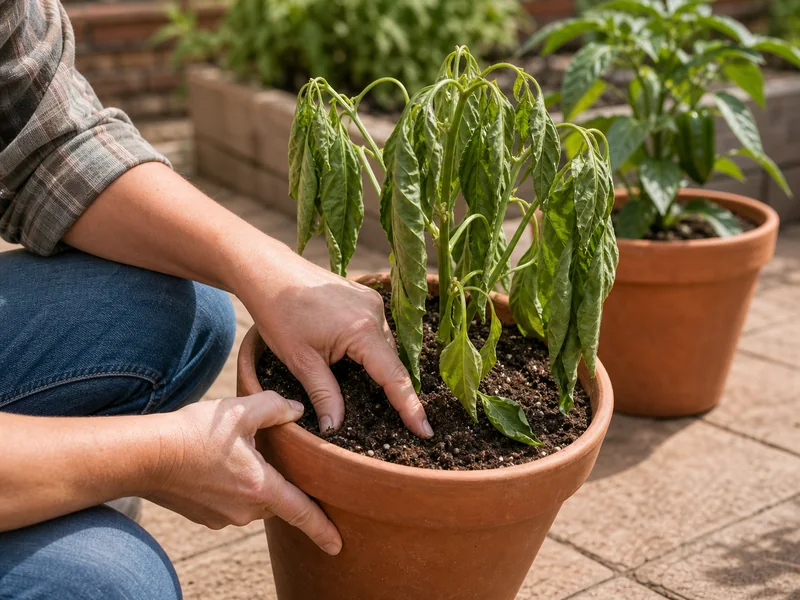
University of Minnesota Extension's vegetable watering guidance points back to deep, even watering because shallow watering keeps roots near the surface. Peppers need moisture where the root mass actually sits.
In containers, water until the whole mix is wet and a little drains out. Then empty the saucer so the pot does not switch from drought to standing water.
In beds, water the root zone and wait. If the plant perks up by evening or the next morning, you had a water deficit.
| Dry-soil clue | What it means | Best response |
|---|---|---|
| Pot feels light | The root ball dried through | Slow soak until water reaches the bottom |
| Soil cracks or pulls from edge | Water may run around roots | Water in two passes, ten minutes apart |
| Leaves recover after watering | Roots still function | Reset the watering interval |
Do not fertilize during a hard wilt. Rehydrate first, then judge the plant after it stands up again.
Why do peppers wilt in the afternoon heat?
Hot afternoons can make pepper leaves droop even when soil moisture is acceptable. The plant is shedding water through leaves faster than roots can keep up for a few hours.
This is common during the first hot stretch after transplanting. The plant has leaves that want sun, but roots that are still building reach.
Check the plant at sunrise. If it looks normal then, the fix is steadier moisture, mulch after the soil warms, and temporary afternoon shade during heat spikes.
Do not keep watering every time leaves sag in the afternoon. That habit can lead straight into wet-root wilt.
A shade cloth, a patio umbrella, or a taller crop on the west side can reduce the worst heat. Use shade as a short-term tool, not a reason to grow peppers in weak light all season.
Why do peppers wilt in wet soil?
Wet-soil wilt is the trap. The leaves look thirsty, but the root zone is too wet for roots to breathe and move water.
University of Maryland Extension notes that poor drainage and excess water can damage container vegetables. In peppers, the visible result is a limp plant over damp soil.
Lift the pot. If it feels heavy and the top still looks damp, stop watering.
Check drain holes and empty saucers.
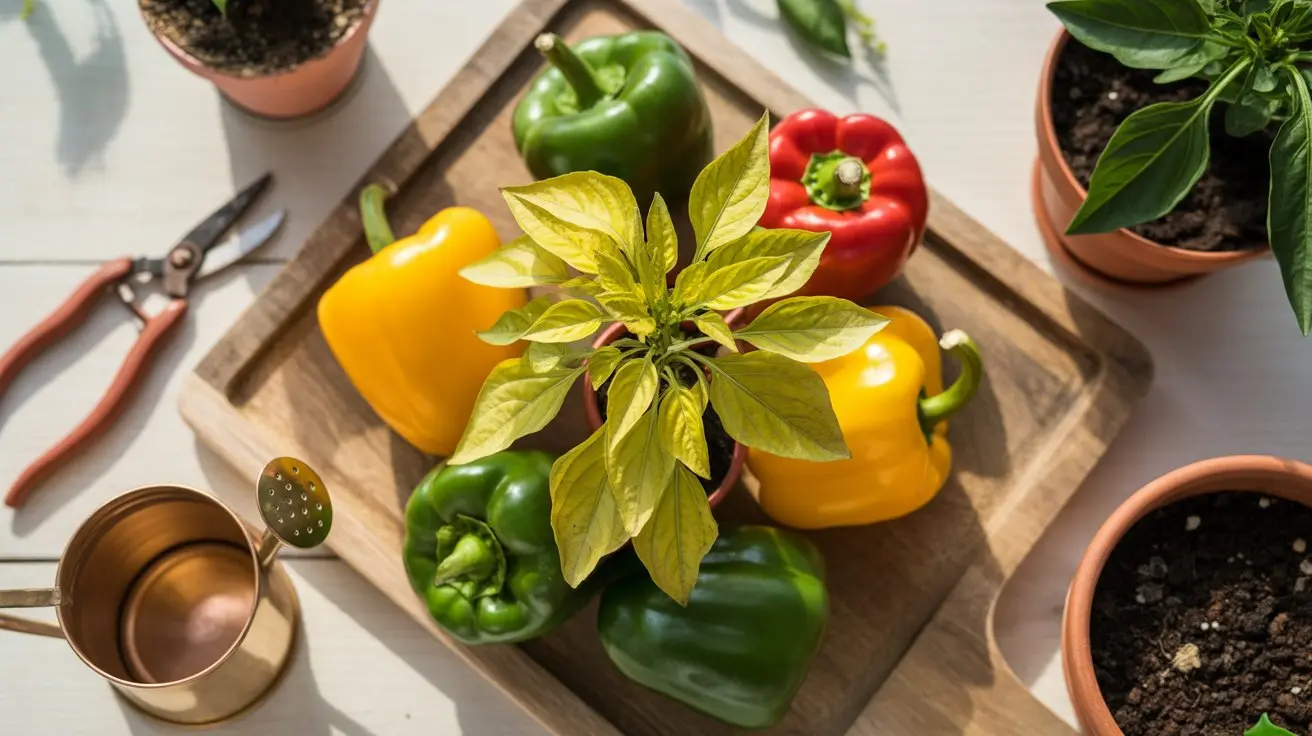
If the soil smells sour, or roots near the edge look brown and soft, treat the plant as a root-risk case. The yellowing pattern in yellow pepper leaves often shows up at the same time.
Mild wet-soil wilt can recover after drying and better airflow. Severe root rot may not, especially if the stem crown turns dark or mushy.
Why do pepper transplants wilt after planting?
A newly planted pepper may wilt because roots lost contact with the soil during planting. This is usually a short pause, not a permanent failure.
Utah State University Extension recommends hardening vegetable transplants before planting outside. Without that step, sun and wind can pull water faster than the young roots can replace it.
Transplant shock should improve in a few days if the soil is warm and evenly moist. New side growth is a better sign than sudden height.
For seedlings moved too early, pair the wilt check with transplanting pepper seedlings. The planting depth, root contact, and hardening-off path matter more than extra feed.
If the plant wilts only in wind, shelter it for a few days. If it wilts in wet soil every morning, stop treating it like normal transplant stress.
When does wilting point to root disease or stem damage?
Some wilt needs a harder decision. A pepper with one-sided wilt, dark crown tissue, collapsing stems, or a sour root ball may have a disease or physical root injury.
NC State Extension describes Phytophthora blight as a serious pepper disease linked to wet conditions. Home gardeners do not need to name every pathogen, but they do need to notice when wet soil and collapse appear together.
Do not compost a plant with stem rot or spreading disease. Bag it, remove nearby fallen leaves, and avoid moving wet soil to clean beds.
If the wilt started after digging, staking, or rough weeding, inspect for broken roots or a cut stem. Mechanical injury can mimic disease because the water path is interrupted.
This is where a simple wilt becomes a plant-health decision. A limp plant with firm green stems gets care.
A limp plant with rotting crown tissue gets removed.
How to revive a wilting pepper plant safely
Match the fix to the soil, not to the leaf shape. Dry soil gets water.
Hot leaves get temporary shade.
Wet soil gets drainage and time.
After the first response, wait until the next morning before making a second change. Peppers often tell the truth after a cool night.
| Confirmed cause | Same-day fix | Do not do this |
|---|---|---|
| Dry root zone | Deep slow watering | Feed while wilted |
| Heat droop | Shade through the hottest hours | Soak repeatedly all afternoon |
| Wet root zone | Drain, dry, and improve airflow | Add more water or fertilizer |
| Transplant shock | Steady moisture and wind protection | Dig it up again too soon |
Long-term, the best prevention is steady soil moisture and warm roots. The routine in watering pepper plants prevents both extremes better than a fixed calendar.
For containers, use a pot large enough to buffer heat. The container pepper setup matters because small pots can swing from dry to soaked in one day.
For beds, solve drainage and spacing before the next planting. A pepper that wilts every wet week is telling you the site needs a better root zone, not a louder fertilizer plan.
What does morning recovery tell you about wilting?
A plant that wilts in the afternoon and stands up again by morning is managing heat. One that is still limp at dawn has a problem in the root zone.
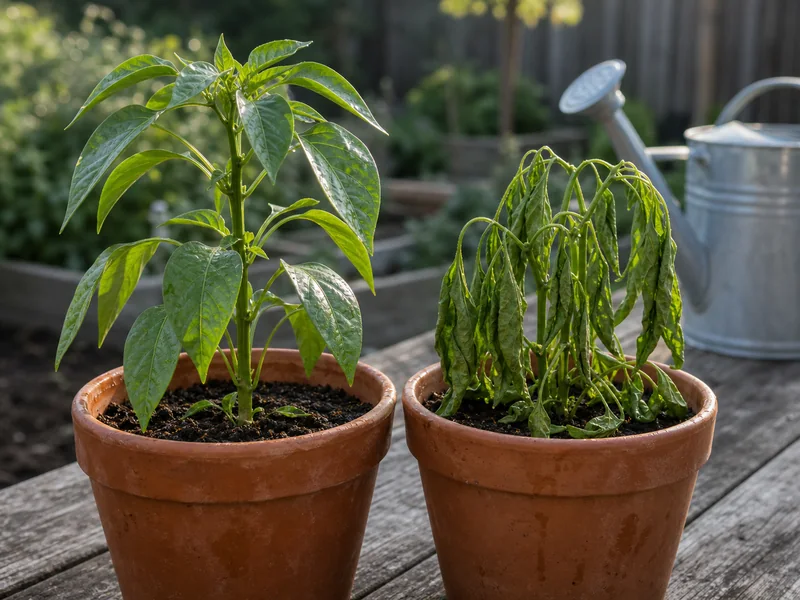
Morning recovery separates normal stress from a real water-flow failure. A plant that perks up overnight is still moving water, even if afternoon heat makes it sag again.
Mark the same plant for three mornings. If it stands well at 7 a.m. but droops at 3 p.m., improve shade, mulch timing, and watering depth before you assume disease.
If it droops at sunrise, the roots did not recover during the easiest part of the day. That points toward dry root balls, waterlogged roots, root damage, or disease.
This simple log prevents panic watering. A single hot afternoon photo can make a healthy pepper look worse than it is.
What recovery should look like over three days
After a dry wilt, the first improvement is posture. Leaves lift, tips firm up, and the plant stops looking limp by the next morning.
After wet-soil wilt, recovery is slower. You may see no new damage first, then firmer new growth after the mix dries and roots get air again.
Transplant wilt improves in small signs. The stem holds better in wind, new leaves look thicker, and the plant stops sagging after every sunny hour.
Do not judge recovery by the oldest damaged leaves. A wilted leaf may stay wrinkled or yellow after the root problem is fixed.
If the plant keeps wilting lower and lower while the crown darkens, stop rescue mode. Remove the plant and protect nearby peppers from the same wet-soil conditions.
Why does wilt keep returning in the same spot?
Repeated wilt in the same bed location is rarely random. Look for a low spot, compacted path edge, roof runoff, or a section of drip line that waters one plant more than the rest.
Move mulch aside and compare soil texture around the weak plant with soil around a healthy one. If the weak plant sits in heavier, colder, or wetter soil, the bed is the problem.
In containers, compare pot color and surface. A black pot on concrete can heat hard in the afternoon, while a pot without feet may drain poorly after rain.
Fix the site before replacing the plant. A new pepper planted into the same wet pocket or overheated pot will repeat the wilt pattern.
For next season, choose morning sun, open airflow, and soil that drains after irrigation. A healthy pepper should not need daily rescue just to stand upright.