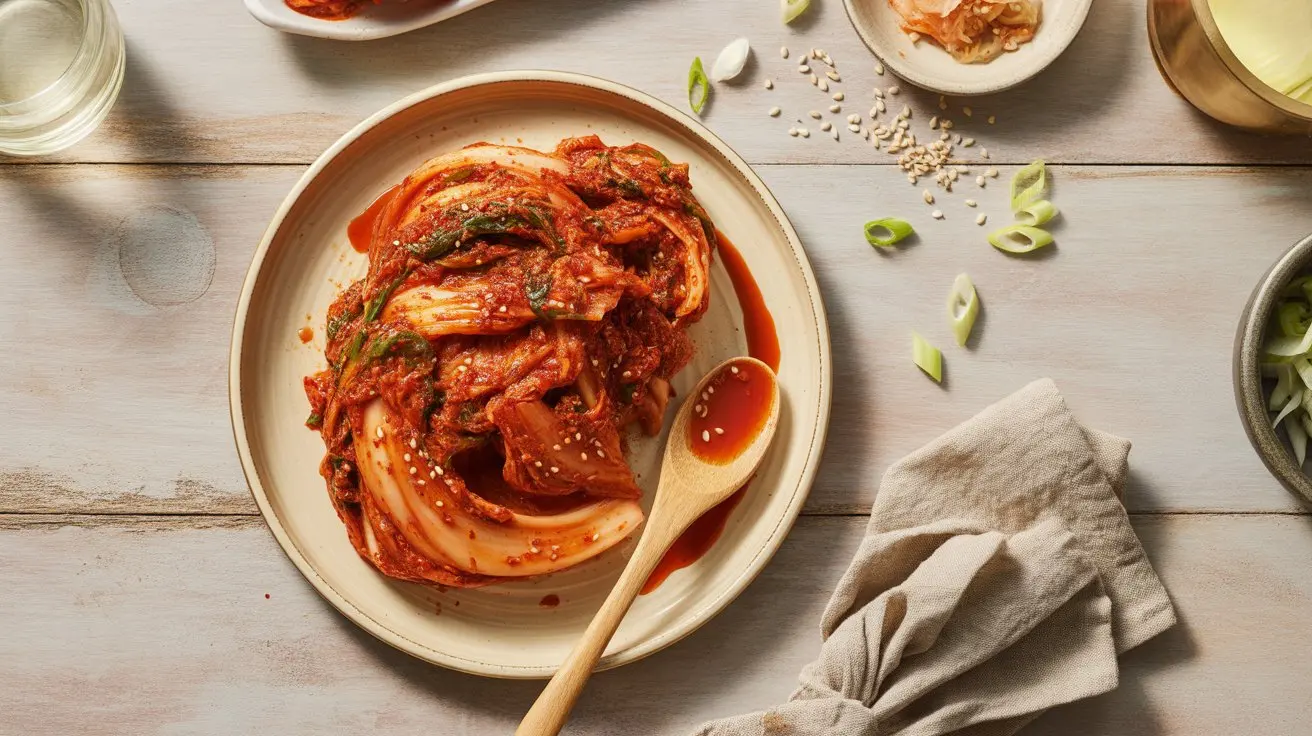
Kimchi with Gochugaru
Make authentic kimchi with Korean gochugaru flakes. Step-by-step fermentation with napa cabbage, fish sauce, and salt ratios. Find your perfect heat level.

What Makes Gochugaru Kimchi Different
Gochugaru is the backbone of authentic kimchi - a coarsely ground Korean red pepper with a heat range of 1,500-10,000 SHU that sits comfortably in the mild-to-approachable end of the pepper spectrum. It is not interchangeable with generic chili flakes, and once you taste the difference, you will understand why.
The aroma hits first - sun-dried, slightly smoky, with a fruity sweetness that has nothing to do with sugar. Then the flavor follows: earthy, complex, with a slow-building warmth that coats rather than stabs. This is what separates Korean kimchi from every other fermented vegetable tradition.
This recipe uses a traditional baechu-kimchi method with napa cabbage, but the technique applies to any vegetable kimchi. Get the salt ratios right, use real gochugaru, and fermentation does the rest.
Understanding Gochugaru's Role
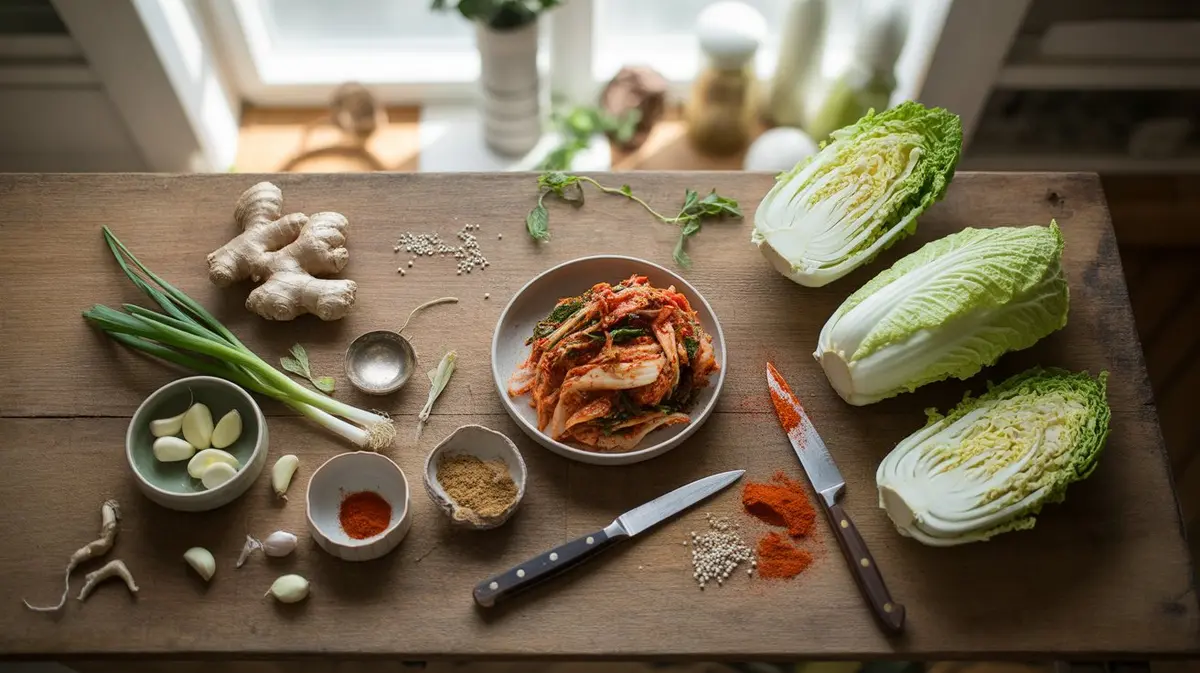
Gochugaru belongs to the Capsicum annuum species, the same botanical family as bell peppers and cayenne, but the specific Korean varieties dried and processed into gochugaru have a flavor profile unlike anything else in that species.
The coarse grind matters. Fine-ground gochugaru turns the kimchi paste muddy and can make the heat feel sharper than it should. The larger flakes distribute through the vegetables while maintaining visual texture - those bright red specks throughout finished kimchi are part of the eating experience.
Compared to something like other traditional Korean pepper preparations, gochugaru is specifically sun-dried rather than smoked or roasted, which preserves that characteristic fruity sweetness. The fermentation process transforms it further - the sugars in the pepper interact with the lactobacillus bacteria to deepen and mellow the heat over time.
Heat Level and Adjustments
At 1,500-10,000 SHU, gochugaru spans a range depending on the specific variety and processing. Most commercial gochugaru lands around 4,000-5,000 SHU - noticeably warm but accessible to most palates, and considerably milder than the sharp intensity of the hot pepper tier.
For milder kimchi, reduce gochugaru to 1/4 cup and add 1 tbsp of sweet paprika to maintain color and body without increasing heat. This approach works well for introducing kimchi to people who are heat-sensitive.
For more heat, adding a small amount of the fiery punch of Cheongyang pepper is the traditional Korean approach - a thin green chili that brings sharp, direct heat without changing the fermentation chemistry.
Technique Tips
Salt quality is non-negotiable. Iodized table salt kills the beneficial bacteria needed for fermentation. Use kosher salt, sea salt, or specifically labeled kimchi salt (천일염, sun-dried sea salt).
The rice paste base is optional but worth doing. It acts as a binder that helps the gochugaru paste cling to the cabbage rather than pooling at the bottom of the jar. The starch also feeds fermentation bacteria, accelerating the process by 12-24 hours.
Temperature control during fermentation directly affects flavor development. Warmer rooms (above 75°F) produce faster, more aggressively sour kimchi. Cooler temperatures produce slower fermentation with more complex flavor development. Traditional Korean kimchi was fermented in clay pots buried in the ground at near-freezing temperatures for months.
Gloves are mandatory when working with gochugaru paste. The pigment in Korean red pepper is extremely persistent and will stain skin orange for 24-48 hours. Nitrile gloves work better than latex for this task.
Variations
- Kkakdugi (Radish Kimchi): Replace napa cabbage with 1 kg daikon radish, cut into 3/4-inch cubes. Same paste recipe, but fermentation takes only 1-2 days at room temperature before refrigerating. The crunch is exceptional.
- Oi Sobagi (Cucumber Kimchi): Use 6 small Korean cucumbers or Persian cucumbers, scored with a cross-cut. Stuff the paste into the cuts. This version is meant to be eaten fresh within 2-3 days - it does not improve with long fermentation.
- Vegan Kimchi: Omit fish sauce and salted shrimp. Replace with 2 tbsp soy sauce plus 1 tbsp miso paste. The umami depth is different but genuinely good - some people prefer it.
- White Kimchi (Baek Kimchi): Make the paste without gochugaru entirely. Use garlic, ginger, Asian pear, and pine nuts. The result is pale, mild, and surprisingly delicate - a completely different eating experience that showcases the fermentation process itself.
- Extra Garlicky Version: Double the garlic to 12 cloves. This is divisive but has devoted fans. The garlic mellows significantly during fermentation, so fresh-tasting sharpness transforms into deep savory notes by week two.
Cooking with Finished Kimchi
Fresh kimchi (1-3 days old) is best eaten as a side dish, cold and crunchy alongside rice. Aged kimchi (2+ weeks) develops the acidity that makes it ideal for cooking.
Kimchi jjigae (kimchi stew) specifically calls for well-fermented kimchi - the sourness is the point, not a flaw. Using fresh kimchi in stew produces a flat, one-dimensional result. The same principle applies to kimchi pancakes (kimchijeon) and kimchi fried rice.
The brine left in the jar after the kimchi is eaten is called kimchi juice and is intensely flavored. A tablespoon stirred into salad dressing, marinades, or even Bloody Marys adds fermented depth that is difficult to replicate any other way.
Storage Notes
Properly made kimchi stored in the refrigerator lasts 3-6 months. The flavor continues evolving throughout - it does not simply stay the same and then go bad. Very aged kimchi (4+ months) becomes quite sour and is typically used for cooking rather than eaten raw.
Signs that kimchi has actually spoiled (rare with correct salt ratios): pink or black mold on the surface, slimy texture, or off-putting smell distinct from normal fermentation funk. White film on the surface is usually harmless kahm yeast - scrape it off and the kimchi beneath is fine.
Store in glass jars with tight-fitting lids. Plastic containers absorb gochugaru pigment permanently and tend to hold odors. Wide-mouth mason jars in 1-quart or half-gallon sizes are the practical choice for home fermentation.
For long-term storage beyond 6 months, kimchi can be frozen. The texture softens significantly after thawing, making it suitable only for cooked applications, but the flavor holds well. Pack in freezer-safe bags, pressing out as much air as possible before sealing.
Chef's Tip: The Resting Period
Patience is an ingredient. After mixing, let the dish rest for 10–15 minutes before serving. This allows the flavours to meld and the seasoning to fully penetrate. If making ahead, refrigerate and bring to room temperature before serving.
Shopping List
-
1 large napa cabbage (about 2 kg / 4.5 lbs)
-
1/4 cup (60g) non-iodized salt (kosher or sea salt)
-
1/2 cup (80g) gochugaru (Korean red pepper flakescoarse grind)
-
1 tbsp fish sauce (or soy sauce for vegan version)
-
1 tbsp salted shrimp (saeujeot)optional
-
6 cloves garlicminced or grated
-
1 tsp fresh gingergrated
-
4 green onionscut into 1-inch pieces
-
1 tsp sugar
-
2 tbsp waterif paste seems too thick
-
2 tbsp sweet rice flour (optionalfor rice paste base)
-
1/2 cup water (for rice paste base)
Full Recipe Instructions
Cut napa cabbage…
Cut napa cabbage lengthwise into quarters, then crosswise into 2-inch pieces. Remove the core.
Toss cabbage with…
Toss cabbage with 1/4 cup salt, massage for 2 minutes, and let sit for 1-2 hours, turning every 30 minutes until wilted.
Rinse cabbage 3…
Rinse cabbage 3 times under cold water, drain in colander for 15-20 minutes, then squeeze out remaining water by hand.
If using rice…
If using rice paste base, whisk sweet rice flour with 1/2 cup water in a saucepan over medium heat, stirring constantly for 3-4 minutes until thickened. Cool completely.
Combine gochugaru, fish…
Combine gochugaru, fish sauce, garlic, ginger, sugar, and cooled rice paste (if using) into a uniform paste. Taste and adjust seasoning.
Using gloved hands,…
Using gloved hands, massage the gochugaru paste into the drained cabbage and green onions until every piece is fully coated.
Pack kimchi tightly…
Pack kimchi tightly into clean glass jars, pressing down firmly to eliminate air pockets. Leave 1-2 inches of headspace.
Seal jars and…
Seal jars and ferment at room temperature (65-75 degrees F) for 1-5 days, pressing kimchi down daily to keep submerged.
Taste daily. Refrigerate…
Taste daily. Refrigerate once desired sourness is reached. Kimchi peaks in flavor at 2-3 weeks in the refrigerator.
Frequently Asked Questions
-
Regular chili flakes are much hotter and lack gochugaru's characteristic fruity, smoky sweetness. The flavor profile of your kimchi will be noticeably different - sharper and less complex. Gochugaru is worth sourcing from a Korean grocery or online.
-
Kimchi is technically edible immediately after making, but 1-2 days at room temperature develops the initial ferment. Most people prefer the flavor at 2-3 weeks refrigerated, when the acidity and depth have fully developed.
-
Iodized salt is the most common culprit - it inhibits the lactobacillus bacteria needed for fermentation. Also check that your fermentation temperature is above 65
More Recipes
View allFresh Salsa Recipe
Restaurant-quality fresh salsa in 10 minutes. Proper tomato prep, right jalapeño amount, and the secret to balanced flavor. Find your perfect heat level.
Jalapeno Poppers Recipe
Classic cream cheese stuffed jalapeño poppers that are crispy outside, creamy inside. Find your perfect heat level.
Pickled Jalapenos Recipe
Two methods: 10-minute quick pickle and proper fermented. Both stay crispy. Find your perfect heat level.
Stuffed Peppers Recipe
Classic stuffed peppers with rice and meat, plus vegetarian and Mexican variations. Covers bell peppers, poblanos, and which peppers stuff best.