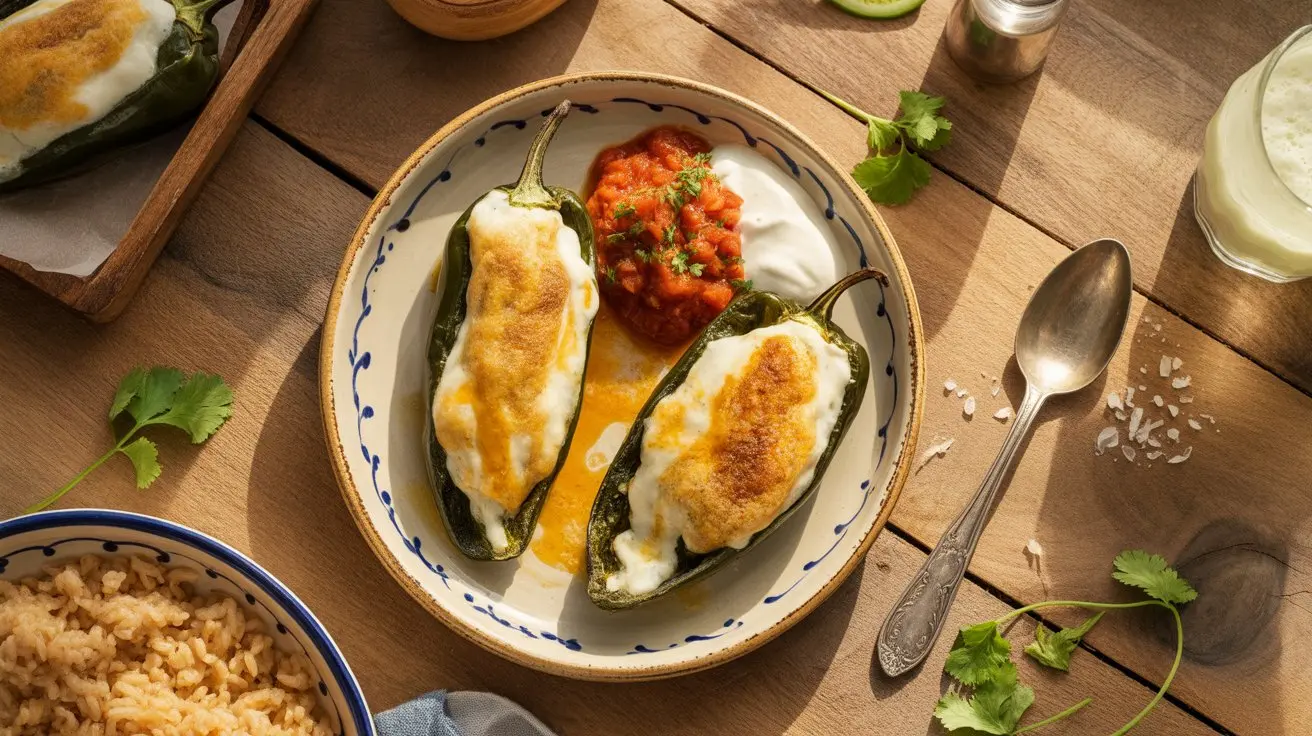
Chile Rellenos Recipe
Classic chile rellenos with roasted poblanos, cheese, and egg batter. Baked and fried versions. Authentic Mexican technique. Find your perfect heat level.

What Makes Chile Rellenos Worth the Effort
Chile rellenos sit at the intersection of technique and tradition. Roasted poblano peppers, filled with melting cheese, dipped in egg batter, and fried golden — this dish rewards patience. The poblano's mild, approachable heat makes it the right pepper for the job: enough character to anchor the dish, gentle enough that the cheese and batter share the spotlight.
This guide covers the full process — roasting, peeling, stuffing, battering, and frying — plus a baked variation and tips for getting the batter to actually stay on.
Understanding the Pepper
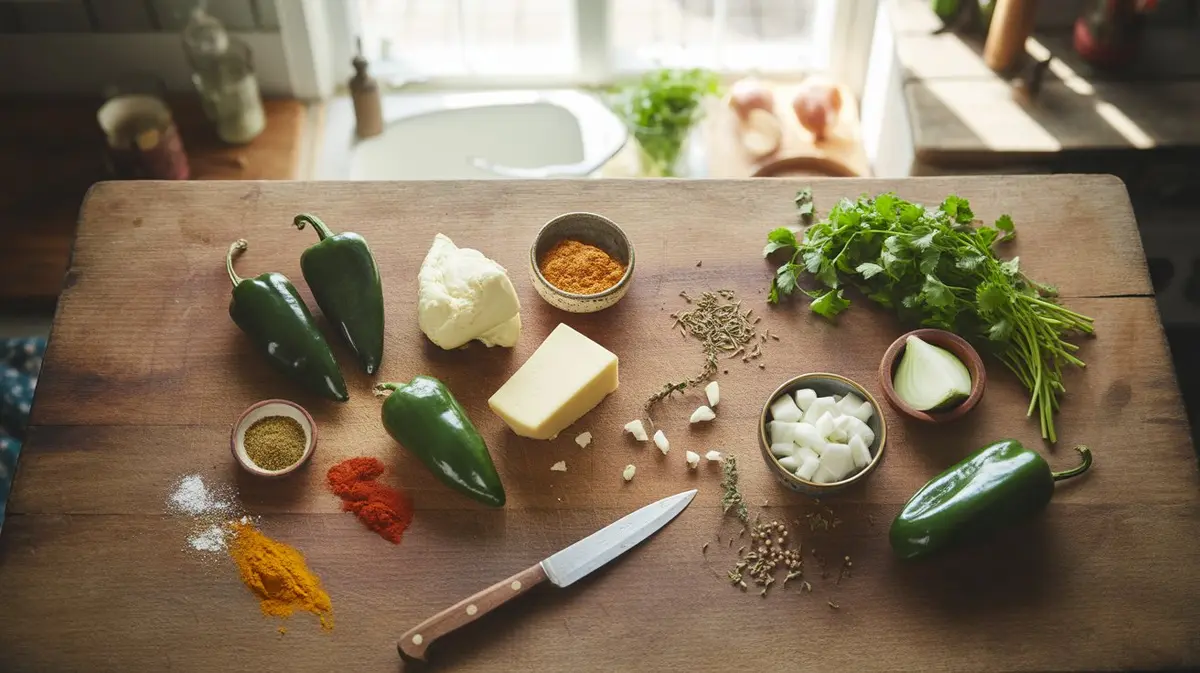
Poblanos (Capsicum annuum species) clock in at 1,000–2,000 SHU on the Scoville rating scale, which puts them well below a Fresno chili — roughly 4–6 times milder than a Fresno's typical 2,500–10,000 SHU range. That mild warmth, combined with an earthy, slightly chocolatey flavor, is exactly what makes them ideal for stuffing.
They're part of a rich Mexican pepper tradition that spans centuries. Dried poblanos become ancho chiles, used extensively in mole and other complex sauces. Fresh, they're the standard for rellenos.
If you want a spicier version, Anaheim peppers' mild grassy flavor works as a substitute, though they're thinner-walled and slightly trickier to stuff. For a step up in heat, the pasilla's deep, raisin-like flavor profile gives the dish a darker complexity.
Equipment
- Gas burner, broiler, or kitchen torch for roasting
- Large zip-top bag or covered bowl for steaming
- Heavy-bottomed skillet or Dutch oven
- Instant-read thermometer
- Stand mixer or hand mixer (for egg whites)
Roasting and Peeling
Proper roasting is non-negotiable. The goal is to blister the skin completely so it peels cleanly, while keeping the pepper intact enough to stuff.
- Place poblanos directly over a gas flame or under a broiler set to high. Turn every 2–3 minutes until the skin is charred and blistered on all sides — this takes 8–12 minutes total. Don't rush it; pale spots mean the skin won't peel.
- Transfer charred peppers immediately to a zip-top bag or a bowl covered tightly with plastic wrap. Let them steam for 15 minutes. This loosens the skin dramatically.
- Peel under cool running water, rubbing the skin away with your fingers. It should slip off in large pieces. Avoid tearing the flesh.
- Make a single vertical slit from stem to tip on one side of each pepper. Carefully remove seeds and membranes with a small spoon, leaving the stem attached. The stem acts as a handle.
- Pat peppers dry inside and out with paper towels. Moisture is the enemy of batter adhesion.
Stuffing
- Fill each pepper with 2–3 oz of cheese, pressing it gently into the cavity. Don't overfill — the slit needs to close around the filling. If adding meat, mix it with the cheese before stuffing.
- Press the slit edges together to close the pepper. Secure with a toothpick if needed, though with practice the batter holds everything.
- Dust each stuffed pepper lightly with all-purpose flour, shaking off excess. This step is critical — flour gives the egg batter something to grip.
Making the Egg Batter
The classic Mexican egg batter (capeado) is lighter than tempura and crispier than a standard flour batter. It relies on whipped egg whites for lift.
- Separate 4 eggs. Beat the whites with 1/2 tsp salt in a clean bowl until stiff peaks form — they should hold their shape when you lift the beater.
- Add the yolks one at a time, folding gently after each addition. Don't deflate the whites; fold with a spatula in slow, wide strokes. Add 1/4 cup flour and fold just until combined. The batter will be airy and pale yellow.
Frying
- Heat 2 inches of vegetable oil in a heavy skillet to 350°F (175°C). Use a thermometer — too cool and the batter absorbs oil, too hot and it burns before the cheese melts.
- Working one at a time, hold a floured pepper by the stem and lower it into the batter, turning to coat completely. Let excess drip for 2 seconds.
- Slide the battered pepper into the oil slit-side up. Fry for 2–3 minutes per side until deep golden. The batter should feel set and spring back slightly when pressed.
- Remove with a slotted spoon and drain on a wire rack set over a sheet pan. A rack keeps the bottom crisp; paper towels trap steam and make it soggy.
- Repeat with remaining peppers, checking oil temperature between batches.
Baked Version
For a lighter result, skip the frying entirely. The texture is different — less crispy, more custardy — but the flavor holds up well.
- Preheat oven to 400°F (205°C). Line a baking sheet with parchment.
- Prepare peppers through the stuffing and flouring steps as above.
- Dip in batter as directed, then place on the prepared sheet. The batter will spread slightly.
- Bake 20–25 minutes until golden and set. Finish under the broiler for 2 minutes to crisp the top.
Technique Tips
Dry peppers thoroughly before flouring. Any moisture under the batter creates steam pockets that cause it to slide off during frying.
If the batter slides off in the oil, the oil is too cool or the pepper wasn't floured. Pull it out, let it drain, reflour, rebatter, and try again with hotter oil.
Don't crowd the pan. Frying more than two peppers at once drops the oil temperature sharply. Work in single-pepper batches if your skillet is small.
Oaxacan cheese melts in long, satisfying pulls — it's the traditional choice. Monterey Jack is a reliable substitute with nearly identical melt behavior. Avoid pre-shredded cheese; the anti-caking agents interfere with melting.
The technique for roasting peppers applies beyond poblanos — the same method works for any thick-walled pepper you need to peel.
Variations
- Picadillo-stuffed rellenos: Replace cheese with a mixture of ground beef, raisins, almonds, tomatoes, and cumin. This is the Puebla-style preparation, considered by many the original version.
- Black bean and corn: A vegetarian filling that holds together well and pairs cleanly with the poblano's earthiness.
- Hotter pepper version: Swap poblanos for Anaheim peppers' milder California-grown heat or, for serious heat seekers, Hatch green chile's distinctive roasted intensity. Hatch chiles sit higher in the medium heat range and bring a different regional character entirely.
- Walnut cream sauce (nogada): During September in Mexico, rellenos are served with a walnut cream sauce and pomegranate seeds — a dish called chiles en nogada. It's a different recipe, but the stuffed poblano technique is identical.
- Air fryer method: Batter and place peppers in a preheated 390°F air fryer. Cook 12–14 minutes, flipping once. The result is crispier than baked but less golden than fried.
Serving
Chile rellenos are typically served with a simple tomato-chile sauce (salsa roja) spooned over the top, not underneath — the sauce adds moisture without softening the batter prematurely.
Rice and refried beans round out the plate in the traditional presentation. A sprinkle of crumbled cotija cheese and fresh cilantro finishes it.
For a homemade salsa roja that complements the dish without overwhelming it, keep it simple: tomatoes, garlic, a dried ancho chile, and salt. Blend and simmer for 10 minutes.
Storage and Reheating
Fried chile rellenos don't store particularly well — the batter softens overnight. That said, they're still good the next day if reheated correctly.
Store cooled rellenos in a single layer in an airtight container in the refrigerator for up to 2 days. Don't stack them.
Reheat in a 375°F oven for 12–15 minutes on a wire rack. This crisps the batter back up reasonably well. Microwaving makes them soft and steamy — avoid it.
Stuffed but un-battered peppers freeze well for up to 3 months. Freeze them on a sheet pan first, then transfer to freezer bags. Thaw overnight in the refrigerator before battering and frying fresh.
Heat Level Context
Poblanos are firmly in the mild pepper category — most tasters don't register any significant burn at all. If your dinner guests are heat-sensitive, this is the dish to make. If someone wants more fire, a side of serrano's bright, cutting heat in a small salsa handles that without altering the main dish.
The receptor science behind why peppers produce heat explains why even mild poblanos occasionally surprise you — capsaicin concentration varies between individual fruits, even on the same plant. A particularly warm poblano isn't a mistake; it's just natural variation.
For anyone curious about how poblanos compare to other peppers in the same family, the key flavor differences between poblano and Anaheim break down which works better for different applications.
Chef's Tip: The Resting Period
Patience is an ingredient. After mixing, let the dish rest for 10–15 minutes before serving. This allows the flavours to meld and the seasoning to fully penetrate. If making ahead, refrigerate and bring to room temperature before serving.
Shopping List
-
6 large poblano peppers
-
8 oz Oaxacan cheese (or Monterey Jack)shredded or in strips
-
4 large eggsseparated
-
1/4 cup all-purpose flourplus more for dusting
-
1/2 tsp salt
-
1/2 tsp black pepper
-
Vegetable oil for frying (about 2 inches deep)
-
Optional: 1/2 cup cooked ground pork or beef
-
Optional: 1/2 cup tomato sauce for serving
Full Recipe Instructions
Roast poblanos directly…
Roast poblanos directly over a gas flame or under a broiler on high, turning every 2-3 minutes until fully charred and blistered on all sides, about 8-12 minutes total.
Transfer charred peppers…
Transfer charred peppers to a zip-top bag or covered bowl and steam for 15 minutes to loosen the skin.
Peel skin under…
Peel skin under cool running water, rubbing it away with your fingers. Make a single vertical slit from stem to tip, remove seeds and membranes, and pat peppers dry inside and out.
Fill each pepper…
Fill each pepper with 2-3 oz of cheese (and optional meat), press the slit closed, and dust the outside lightly with flour, shaking off excess.
Separate 4 eggs.…
Separate 4 eggs. Beat whites with 1/2 tsp salt to stiff peaks, then fold in yolks one at a time, followed by 1/4 cup flour, until just combined.
Heat 2 inches…
Heat 2 inches of vegetable oil in a heavy skillet to 350 degrees F (175 degrees C).
Dip each floured…
Dip each floured pepper into the egg batter to coat completely, let excess drip, then lower slit-side up into the hot oil.
Fry 2-3 minutes…
Fry 2-3 minutes per side until deep golden. Remove with a slotted spoon and drain on a wire rack.
Serve with tomato-chile…
Serve with tomato-chile sauce spooned over the top, alongside rice and refried beans.
Frequently Asked Questions
-
You can roast, peel, and stuff the peppers up to 24 hours ahead and refrigerate them. Batter and fry them just before serving - the batter does not hold well once fried.
-
The two most common causes are insufficient flouring before battering and oil that is too cool. Make sure peppers are completely dry, dusted with flour, and the oil is at a steady 350 degrees F before adding the pepper.
-
Oaxacan cheese is traditional and melts into long, satisfying strands. Monterey Jack is the most widely available substitute with nearly identical melt behavior. Avoid pre-shredded cheese, which contains anti-caking agents that inhibit melting.
-
Poblanos range from 1
More Recipes
View allFresh Salsa Recipe
Restaurant-quality fresh salsa in 10 minutes. Proper tomato prep, right jalapeño amount, and the secret to balanced flavor. Find your perfect heat level.
Jalapeno Poppers Recipe
Classic cream cheese stuffed jalapeño poppers that are crispy outside, creamy inside. Find your perfect heat level.
Pickled Jalapenos Recipe
Two methods: 10-minute quick pickle and proper fermented. Both stay crispy. Find your perfect heat level.
Stuffed Peppers Recipe
Classic stuffed peppers with rice and meat, plus vegetarian and Mexican variations. Covers bell peppers, poblanos, and which peppers stuff best.