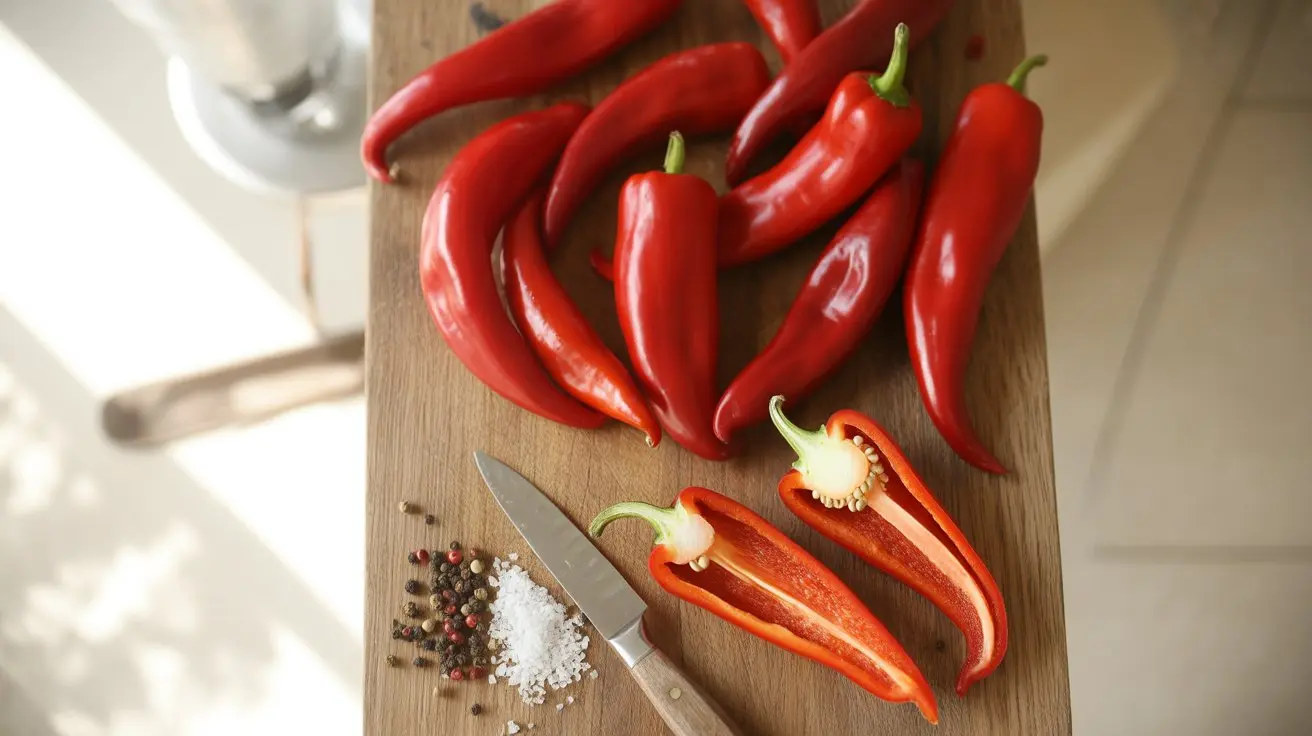
Jimmy Nardello

Jimmy Nardello is a heat-free Italian heirloom frying pepper with a 0–500 SHU range and an intensely sweet, fruity flavor that develops fully when the pods are fried in olive oil. Originally from Basilicata, Italy, this C. annuum variety has become a favorite among gardeners and chefs for its thin-walled, elongated pods and extraordinary sugar content.
- Species: C. annuum
- Heat tier: Mild (0–999 SHU)
What is Jimmy Nardello?
Pull a ripe Jimmy Nardello off the vine and you'll notice the deep crimson skin before anything else — thin, wrinkled, almost translucent in spots. Bite in raw and there's zero heat, just clean sweetness with a faint fruitiness that's closer to a sun-dried tomato than anything you'd call a pepper.
The pods reach 6–10 inches in length, tapering to a gentle twist at the tip. That thin wall is the key to everything this pepper does in the kitchen — it fries fast, caramelizes beautifully, and loses almost no volume in the pan. No seeds to fuss over, no capsaicin to worry about.
Botanically, it belongs to the wide-ranging C. annuum species, which covers everything from bell peppers to cayennes. Jimmy Nardello sits at the sweetest, mildest end of that spectrum — firmly in the mild heat category (0–999 SHU) with most pods measuring below 200 SHU in practice.
This is a pepper that rewards patience. Plants are productive but slow to ripen, often taking 80–90 days from transplant. The wait is worth it. Once those pods start turning from green to red, they come in waves, and the flavor difference between an underripe green pod and a fully crimson one is dramatic — the sugars concentrate as color develops.
History & Origin of Jimmy Nardello
The story of Jimmy Nardello begins in Basilicata, the rugged southern Italian region where the Nardello family grew this pepper for generations. In 1887, Jimmy's parents immigrated to Naugatuck, Connecticut, bringing seeds with them. Jimmy Nardello — born in 1887 and raised in Connecticut — tended the variety his whole life.
After his death in 1983, his wife Carmela donated seeds to the [Slow Food Ark of Taste](https://www.slowfoodusa.org/), preserving what could have become a lost heirloom. The variety gained broader recognition through Seed Savers Exchange, which helped distribute it to gardeners across North America.
Today it's celebrated in the Italian pepper growing tradition as one of the finest frying peppers in existence — a living link between a Basilicatan village and American kitchen gardens.
How Hot is Jimmy Nardello? Heat Level & Flavor
The Jimmy Nardello delivers 0–500 Scoville Heat Units, placing it in the Mild tier (0–999 SHU).
Flavor notes: sweet and fruity.
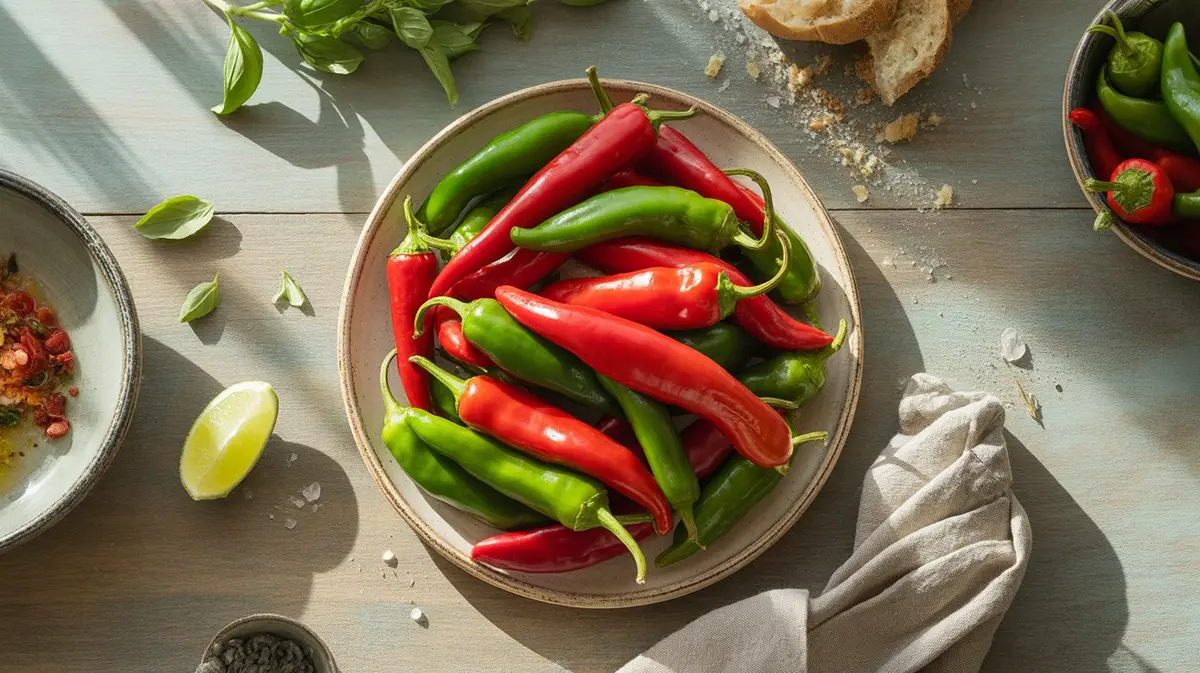
Jimmy Nardello Nutrition Facts & Health Benefits
As a zero-heat sweet pepper, Jimmy Nardello delivers nutrition without capsaicin. A 100g serving of raw red sweet pepper provides roughly 31 calories, 7g carbohydrates, and meaningful amounts of vitamin C (127mg, over 140% of daily value) and vitamin A (157mcg RAE).
The thin walls mean lower water content than bell peppers, slightly concentrating sugars and flavor compounds. The broader C. annuum species tends to be rich in antioxidant carotenoids — the deep red color in fully ripe Jimmy Nardellos signals high lycopene and beta-carotene content. Nutritional values are based on USDA FoodData Central data for red sweet peppers.
Best Ways to Cook with Jimmy Nardello Peppers
The standard preparation is simple: hot olive oil, whole pods, high heat. The thin walls blister in under three minutes, the sugars caramelize against the pan, and the result is something that tastes richer than the raw pepper suggests. Salt immediately after pulling from the oil.
Raw, Jimmy Nardellos work well in salads where you want sweetness without bulk. Their flavor profile sits near the sweet, mild depth of smoked Spanish pimentón when roasted — concentrated and almost jammy.
For antipasto boards, roast them whole at 450°F until charred, then peel and dress with good olive oil and capers. They also pickle beautifully — the thin skin absorbs brine quickly, and their natural sugar balances the acid well. Think of how tangy, low-heat Italian pickled peppers function on a sandwich, then imagine a sweeter, fruitier version.
Stuffing is possible but not the pepper's strength — the thin walls don't hold fillings the way a thicker-walled sweet, dense-fleshed roasting pepper like piquillo would. Use them for what they do best: fast, hot cooking that brings out their remarkable sweetness.
Where to Buy Jimmy Nardello & How to Store
Jimmy Nardellos rarely appear in supermarkets — farmers markets and specialty grocers are your best source from July through September. Look for fully red pods with taut, unwrinkled skin. A little natural twisting at the tip is normal; avoid any with soft spots or mold near the stem.
At home, store unwashed in the refrigerator for up to 1 week. For longer storage, roast and freeze in olive oil — they hold flavor well for 6 months this way. Dried Jimmy Nardellos, strung and hung Italian-style, will last through winter and can be rehydrated or ground. Seeds from ripe pods save easily for next season's planting.
Best Jimmy Nardello Substitutes & Alternatives
Whether you ran out of jimmy nardello or just want to try something different, these peppers make solid stand-ins. We picked them based on heat range, flavor overlap, and how well they actually work in the same dishes.
Our top pick: Banana Pepper (0–500 SHU). Same species (C. annuum) and nearly the same heat, so it swaps in at a 1:1 ratio without changing the character of the dish. The flavor leans mild and tangy, which is close enough that most people won’t notice the difference in a cooked recipe.
How to Grow Jimmy Nardello Peppers
Jimmy Nardello is a rewarding garden pepper, but it needs a long, warm season — plan for 80–90 days from transplant to ripe red pods. Start seeds indoors 8–10 weeks before your last frost date. Germination is reliable at soil temperatures between 75–85°F.
Transplant into full sun once nighttime temps stay consistently above 55°F. For practical guidance on pepper plant spacing, these plants get substantial — give them 18–24 inches between plants. They'll reach 3–4 feet tall and benefit from staking once pods load up.
Soil prep matters more than fertilizer. Well-draining, slightly acidic soil (pH 6.0–6.8) with good organic matter produces the most flavorful pods. Heavy nitrogen feeding pushes foliage at the expense of fruit — back off nitrogen once flowering begins and shift toward phosphorus and potassium.
For a full seed-starting and transplant guide for peppers, the principles that apply to thin-walled Italian varieties like Jimmy Nardello are similar to those for cultivation of thick-walled sweet varieties like pimento — consistent moisture and warm roots are everything. Drip irrigation or consistent hand-watering prevents blossom drop, which is the most common complaint with this variety in hot, dry climates.
Frequently Asked Questions
-
No — Jimmy Nardellos register 0–500 SHU, with most pods closer to zero than 500. They contain no meaningful capsaicin, making them completely safe for anyone sensitive to heat.
-
Frying whole in hot olive oil for 2–3 minutes until blistered is the classic method and the one that best showcases their sweetness. Roasting at high heat is a close second, producing a jammy, concentrated flavor.
-
Expect 80–90 days from transplant before pods fully ripen to red. Green pods will appear much earlier, but the signature sweetness only develops once the pepper reaches full red maturity.
-
Yes — as an open-pollinated heirloom, Jimmy Nardello seeds come true from ripe pods. Isolate plants from other C. annuum varieties by at least 300 feet if you want to prevent cross-pollination.
-
The variety originated in Basilicata, Italy, brought to Connecticut by the Nardello family in 1887. Seeds were preserved by Seed Savers Exchange after Jimmy Nardello's death in 1983.
- Slow Food USA - Ark of Taste: Jimmy Nardello's Sweet Italian Frying Pepper
- Seed Savers Exchange - Jimmy Nardello Pepper
- USDA FoodData Central - Sweet Red Pepper, Raw
- University of California Cooperative Extension - Pepper Production
Species classification: C. annuum — based on published botanical taxonomy.