What to Do With Fresh Cayenne Peppers: Cook, Dry, Freeze, or Pickle
Sort fresh cayenne peppers by condition before choosing a use. Cook firm pods fresh when you want bright, direct heat, dry thin-walled red pods for flakes or powder, freeze washed and stemmed peppers for cooked dishes, and reserve larger batches for sauce or refrigerator pickles.
A pile of fresh cayenne peppers can become dinner tonight, a jar of flakes for the pantry, frozen portions for winter meals, or a batch of sauce. The best choice depends on the pods' condition and on whether you want to preserve their fresh texture or concentrate their heat.
Colorado State University identifies cayenne as a thin-walled Capsicum annuum pepper used fresh, in salsa and hot sauce, or dried and ground. That thin wall makes dehydration especially practical, while the National Center for Home Food Preservation also provides a simple freezing method for hot peppers.
What should you do first with fresh cayenne peppers?
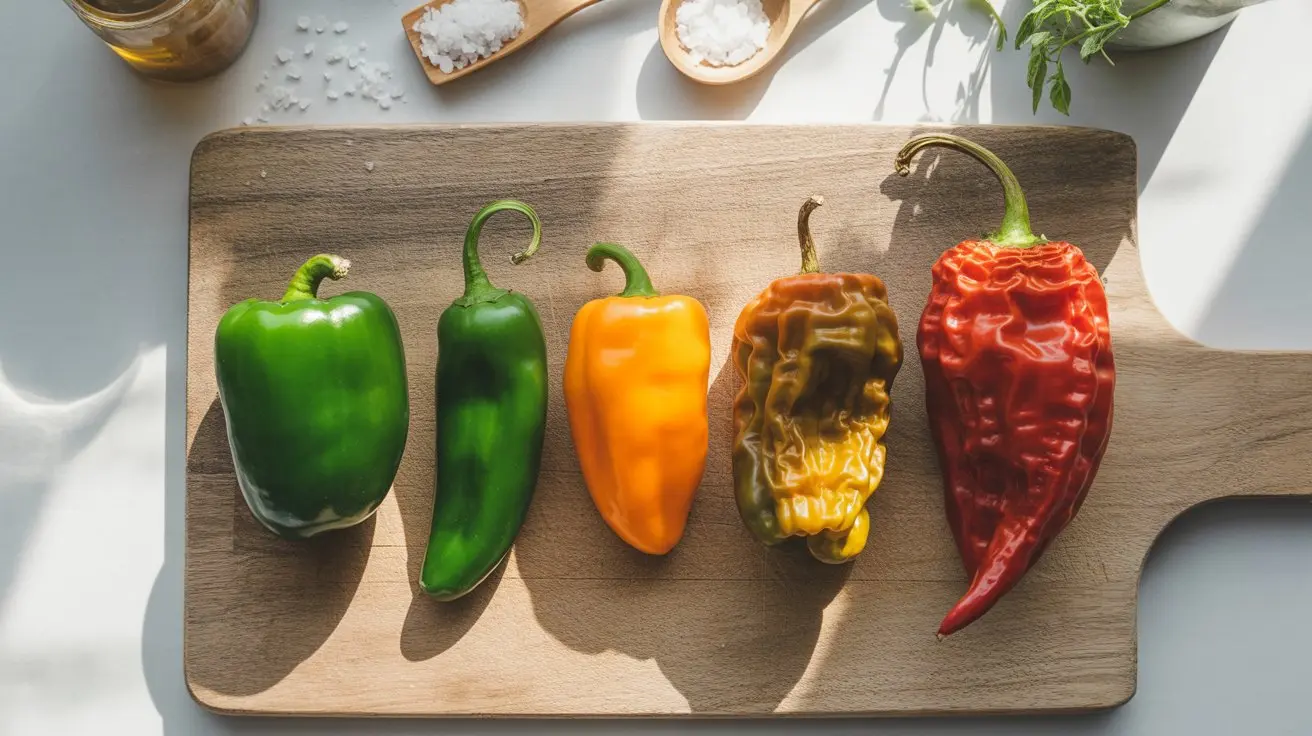
Sort the harvest before washing it.
Put firm, unbroken pods in one group, set soft but sound peppers aside for immediate cooking, and discard anything with spreading mold, leaking tissue, or a sour odor.
Do not choose one method for every pod merely because they ripened together. A handful can season several meals, while a full basket is easier to manage when you divide it between one quick project and one longer-storage method.
| What you have | Best next move | Why it fits |
|---|---|---|
| A few firm pods | Cook fresh | You can control the heat one small portion at a time. |
| A tray of ripe red pods | Dry for flakes or powder | Thin walls lose moisture efficiently and the result stores compactly. |
| Little time today | Freeze washed, stemmed pods | The official method requires very little preparation. |
| Enough for a jar or bottle | Make sauce or refrigerator pickles | A batch project turns many pods into measured portions. |
| Green end-of-season pods | Cook fresh or freeze separately | The greener flavor works differently from ripe red cayenne. |
Wash only the group you are ready to process, then dry the surfaces well. Extra moisture is harmless in a pot of soup but works against crisp drying and can freeze into a block around loose peppers.
How can you cook with fresh cayenne peppers?
Fresh cayenne works best when you decide where the heat should appear in the dish. Thin rings create noticeable bites, a fine mince spreads heat through a salsa or relish, and a slit whole pod can flavor a simmering liquid before you remove it.
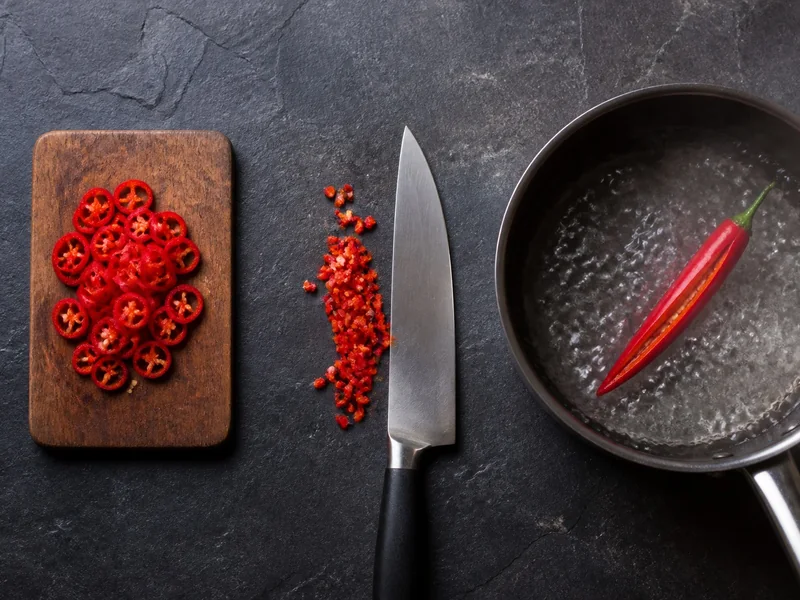
Start with less than you think you need because one narrow pod can season more food than its size suggests. Add a small amount early when you want the heat integrated, or add a few raw rings at serving time when you want a sharper contrast.
- Eggs and beans: soften a few thin rings in the cooking fat before adding the main ingredients.
- Soups and stews: simmer one slit pod, taste the broth, and remove the pod before the heat overtakes the other flavors.
- Salsa and relish: mince a small piece so the heat distributes rather than landing in one large bite.
- Stir-fries: slice on a bias and add near the aromatics, where hot oil carries the pepper through the pan.
- Vinegar or citrus dressings: steep a few rings briefly, then strain when the liquid reaches the intensity you want.
Cayenne has less flesh than a jalapeno or poblano, so it contributes heat without adding much bulk. Pair it with tomato, onion, fruit, beans, or a sweet pepper when the dish needs body as well as pungency.
Removing seeds changes texture more reliably than it removes heat. Much of a chile's capsaicin sits in the pale internal tissue around the seeds, so trimming that tissue reduces direct contact more effectively than shaking out loose seeds alone.
Should you dry or freeze cayenne peppers?
Dry cayenne when you want a shelf-friendly seasoning, and freeze it when you want pieces that still behave like fresh pepper in cooked food.
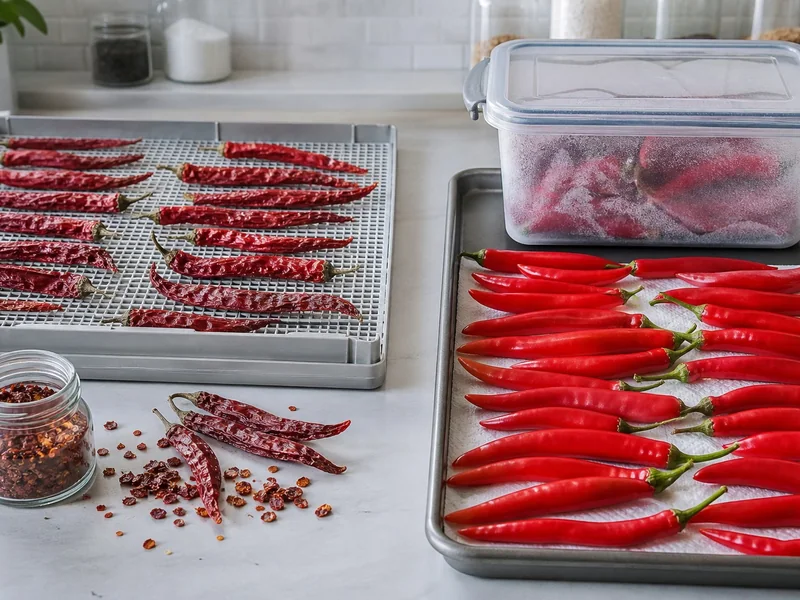
Neither method preserves the crisp bite of a just-picked pod, but each protects a different kind of usefulness.
The National Center for Home Food Preservation instructs home cooks to wash and stem hot peppers, package them without headspace, seal, and freeze. You can leave small cayennes whole or portion them before freezing, but thawed peppers will soften and belong in sauces, soups, curries, and other cooked dishes.
Drying changes the job completely. Follow the full method in our guide to dry peppers, and do not grind until every pod is brittle enough to snap rather than bend.
Keep dried cayennes whole when you want to toast or rehydrate them later. Crush them coarsely for visible flakes, or grind them finely when you need heat to disappear into a rub, soup, or sauce.
- Choose clean pods without bruises or soft spots.
- Space pieces so air can move around them.
- Continue drying until the thickest part snaps cleanly.
- Let the dried pods cool before sealing them.
- Check the container for condensation during the first days of storage.
If moisture appears inside the container, the peppers were not fully dry. Return them to the dehydrator rather than trusting a damp batch in a sealed jar.
Should dried cayenne stay whole, become flakes, or become powder?
Keep part of the batch whole when you want the most flexibility. A whole dried pod can be toasted briefly, steeped in a pot of beans, broken into a braise, or rehydrated before blending, and the intact pod exposes less surface area during storage.
Flakes suit food that benefits from visible, uneven bursts of heat. Crush only a small jar at a time, because coarse pieces are easy to pinch over pizza, roasted vegetables, noodles, and eggs without coating every bite equally.
Powder is the right endpoint when the cayenne must disperse through a rub, soup, sauce, or seasoning blend. Grind a modest amount, measure it with a dry spoon, and keep the remaining pods whole until you need another batch.
A salt blend can make very hot powder easier to dose, but record the ratio on the container rather than judging the mixture by color. Two red blends can carry very different amounts of cayenne, especially when paprika or another ground chile supplies most of the volume.
What can you do with green cayenne peppers?
Green cayenne peppers are edible and useful.
The Colorado State University cayenne fact sheet confirms that the fruit can be eaten green before it ripens red.
Use green pods where a fresher, more vegetal pepper character makes sense, such as chopped into beans, eggs, green salsa, or a quick pan sauce. Keep them separate from ripe red pods when you dry or freeze them so you can choose that flavor deliberately later.
An early frost does not require you to waste every unripe pod. Harvest firm peppers before damaging cold, use some immediately, and freeze the rest for cooked dishes where crispness will not matter.
Do not assign a precise heat reduction to color alone. Cultivar, growing conditions, individual pod development, and the amount of internal tissue in the portion can all change the bite, so taste a tiny piece before committing several pods to one dish.
Can you turn a large cayenne harvest into sauce or pickles?
A large harvest earns a batch project when you can measure the ingredients and store the result correctly.
Fresh sauce, refrigerator pickles, and fermented pepper mash solve different problems, so decide whether you want an immediate condiment, crisp acidic pieces, or a longer fermentation process.
For sauce, use the complete technique in our guide to make hot sauce rather than guessing acidity from the color or taste. Cayenne supplies strong, clean heat, while sweet pepper, carrot, onion, or fruit can add volume and soften the intensity without hiding the chile completely.
Refrigerator quick-pickled peppers are the simpler choice when you want sliced cayennes for pizza, fried rice, sandwiches, beans, or tacos. A narrow pod packs neatly into a jar, but it needs the same clean preparation and cold storage as other refrigerator pickles.
Refrigerator pickling and shelf-stable canning are different processes. Do not invent a water-bath canning formula by adjusting vinegar, pepper quantity, jar size, or processing time in an untested recipe.
Fermentation is another distinct method, not a shortcut around food-safety controls. Weigh salt accurately, keep the peppers submerged, use clean equipment, and follow a dedicated tested process before deciding how the finished mash will be refrigerated or turned into sauce.
Match the batch to how you actually cook. A quart of very hot sauce may linger for months, while several small jars of pickled rings or frozen portions can spread the harvest across more meals with less waste.
How should you handle cayenne peppers before grinding?
Grinding dried cayenne creates fine particles that can reach your eyes, nose, throat, and nearby surfaces.
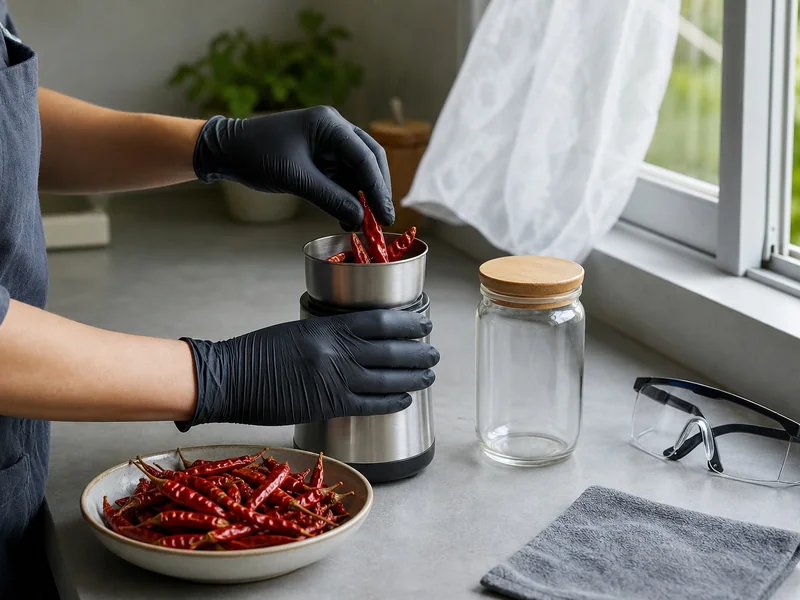
The same capsaicin that produces the pepper's heat can transfer from pods to hands and then to contact lenses, skin, or a child's face.
- Ventilate the room. Work beside an open window or under an exhaust hood that vents outdoors.
- Protect your hands and eyes. Wear intact gloves and avoid touching your face while handling broken pods.
- Use a dedicated grinder if possible. Fine cayenne residue can remain in seams and flavor the next ingredient.
- Let dust settle. Wait before opening the grinder lid, then lift it away from your face.
- Clean deliberately. Wash removable parts according to the appliance instructions and wipe the work surface with a damp cloth.
Do not test freshly ground powder by smelling directly over the grinder. Move a small amount into a closed jar, clean the station, and taste the powder later in food where the dose is easier to control.
Label the jar with the pepper and processing date, especially if you also make mild paprika, mixed chile flakes, or a salt blend. The label prevents a concentrated cayenne powder from being mistaken for a seasoning that can be spooned freely.
The most useful cayenne harvest is not necessarily the one transformed into the most products. Keep enough fresh for the meals ahead, choose one preservation method that matches your cooking, and process the remainder while the pods are still sound.