Pepper Companion Planting
Best and worst companion plants for peppers. What to plant nearby and what to avoid. Find your perfect heat level.

Why Companion Planting Matters for Peppers
Peppers are particular plants. They want warmth, consistent moisture, and protection from the pests that seem to find them irresistible. Companion planting — the practice of pairing crops based on mutual benefit — can address all three without reaching for a spray bottle.
The logic isn't mystical. Some plants repel insects through volatile compounds in their foliage. Others fix nitrogen, improve soil structure, or simply act as physical barriers. A few attract beneficial predators that eat your aphids before you even notice them.
Whether you're growing mild snacking peppers like the blistered, occasionally surprising shishito or something from the extreme end like the Infinity Chili's scorching superhot tier, the companion principles stay the same — though the stakes feel higher when you've invested months in a rare variety.
The Best Companions for Peppers
Not every beneficial pairing works the same way. Some plants deter pests directly. Others improve growing conditions or simply don't compete for the same resources. Here's what actually earns a spot near your peppers.
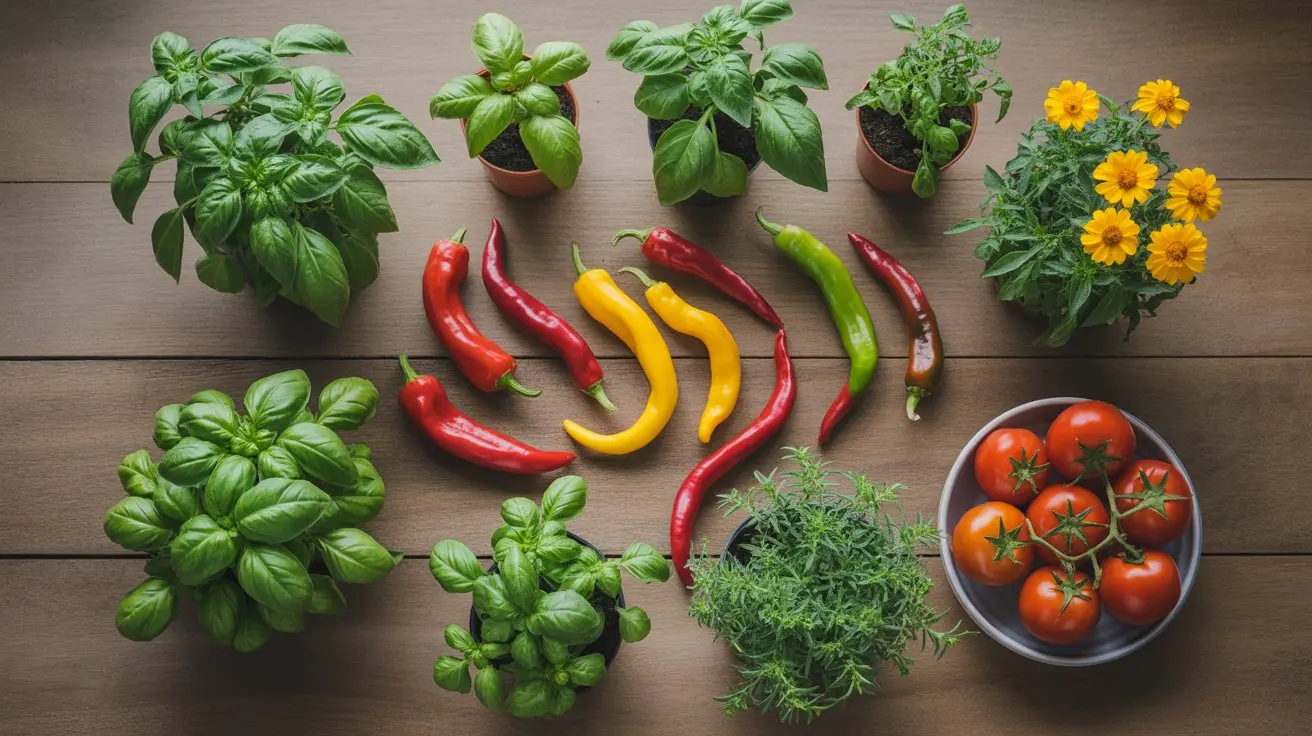
Basil
Basil is the most cited pepper companion for good reason. The aromatic oils in its leaves — particularly linalool and eugenol — interfere with aphid and thrip navigation. Plant it within 18 inches of your peppers for the strongest effect.
Beyond pest suppression, basil and peppers share nearly identical growing requirements: full sun, warm soil, consistent watering. They won't compete. Some growers report improved flavor in both crops when grown together, though the mechanism isn't fully understood.
Carrots
Carrots planted near peppers loosen compacted soil as their taproots grow, improving drainage and aeration around pepper roots. They also don't compete for canopy space — their feathery tops stay low while your pepper plants grow upward.
One caveat: let carrots mature before harvesting, and don't disturb pepper roots in the process. The benefit is structural, not chemical, so spacing matters less here than with aromatic herbs.
Tomatoes
Tomatoes and peppers share Solanaceae family membership and nearly identical cultural requirements, which makes them natural bed partners in terms of care. They can share irrigation schedules, fertilizer regimens, and sun exposure without conflict.
The tradeoff: they also share pests and diseases, particularly bacterial spot and pepper weevil. If you've had disease pressure in previous seasons, separate them. If your garden is clean and you're working with limited space, tomatoes are a practical neighbor.
Marigolds
French marigolds (Tagetes patula) produce alpha-terthienyl in their roots, a compound toxic to soil nematodes. Plant them as a border around pepper beds, and they'll suppress root-knot nematode populations over a full season.
Above ground, their strong scent deters whiteflies and aphids. Marigolds also attract hoverflies, whose larvae eat aphids aggressively. Plant them 12 inches from pepper stems — close enough to work, far enough not to shade low-growing pepper foliage.
Spinach and Lettuce
Low-growing leafy greens make excellent ground cover under taller pepper plants. They shade the soil, reducing moisture evaporation and suppressing weed germination. This is particularly useful during the long wait between transplanting and first fruit set.
Both spinach and lettuce bolt in heat, so time them to finish before your pepper plants hit full canopy. In spring, they act as living mulch. By midsummer, they're done and your peppers are shading the ground themselves.
Parsley
Parsley attracts parasitic wasps — tiny beneficial insects that lay eggs inside hornworm caterpillars and aphids, killing them from the inside. It's a slow-burn benefit that pays off more in established gardens where beneficial insect populations have had time to build.
Let a few parsley plants go to flower. The flat umbel blooms are landing pads for these wasps and for predatory beetles that patrol your soil surface at night.
Garlic and Onions
Alliums produce sulfur compounds that repel aphids, spider mites, and some beetles. Garlic planted at the corners of a pepper bed creates a scent perimeter that many soft-bodied insects avoid.
They also take up minimal above-ground space and finish early in the season, leaving room for pepper plants to spread. If you're growing larger varieties — like the NuMex Big Jim, known for its record-length pods — alliums make efficient use of early-season bed space before those plants need the room.
Companion Planting by Heat Level
The variety you're growing doesn't change which companions work, but it does change your priorities. Here's how to think about it by heat tier.
Mild peppers — like anchos and shishitos — are typically grown in higher volume for fresh use and preservation. Pest pressure matters more at scale, so marigold borders and basil interplanting pay off the most. Check the mild heat range for more varieties in this category.
Hot and extra-hot peppers — including varieties from the hot pepper tier and the extra-hot range — are often grown in containers or dedicated beds. In those settings, basil in adjacent pots and a marigold border around the bed works well.
Superhot varieties like the Dorset Naga, with its intense fruity heat or the 7 Pot Red Giant's extreme capsaicin output, require longer growing seasons and are often started indoors months before transplanting. These plants need every advantage — companion planting is worth the extra planning. The superhot range covers varieties where even small yield losses sting.
What to Keep Away from Peppers
Bad companions aren't just neutral — some actively harm pepper plants through allelopathy (chemical suppression), competition, or by hosting the same pests. These are the plants to relocate.
Fennel
Fennel is allelopathic to almost everything. It releases compounds from its roots and foliage that inhibit germination and growth in neighboring plants, including peppers. Keep fennel at least 10 feet from any vegetable bed. It's useful in the garden, but only in isolation.
Brassicas
Cabbage, broccoli, kale, and their relatives compete aggressively for calcium and magnesium — the same nutrients peppers need for cell wall development and blossom-end rot prevention. They also attract aphids in large numbers, which will migrate to your peppers once the brassica crop matures.
Apricot Trees
Apricots produce juglone (or related compounds), which can suppress solanaceous crops including peppers. More practically, fruit tree canopies reduce the full sun that peppers need. Keep peppers 20+ feet from any established fruit tree.
Beans
This one is debated. Beans fix nitrogen, which sounds beneficial, but they also attract bean beetles that readily move to pepper plants. In small gardens where these crops end up close together, the pest transfer risk outweighs the soil benefit. Grow beans in a separate bed.
Corn
Corn shades aggressively and attracts corn earworm, which feeds on pepper pods just as readily as corn ears. The shade alone can reduce pepper yields significantly — peppers need 6-8 hours of direct sun minimum. Keep corn on the far side of the garden.
Spacing and Layout Strategies
Knowing which plants to pair is only half the equation. How you arrange them determines whether the benefits actually reach your peppers.
- Border planting: Ring your pepper bed with marigolds 12 inches from the outermost plants. This creates a perimeter deterrent without competing for root space or light.
- Interplanting: Tuck basil between pepper plants at 18-inch spacing. Parsley works well at the ends of rows where it won't shade pepper foliage.
- Ground cover layer: Plant spinach or lettuce in the gaps between newly transplanted peppers. They'll finish before your peppers need the space.
- Allium corners: Place garlic or onion sets at the four corners of a raised bed. The scent radiates outward and inward, covering the whole bed.
- Beneficial insect zones: Leave a small patch of flowering herbs — parsley, dill, cilantro allowed to bolt — adjacent to your pepper bed. This is your beneficial insect habitat, not a companion plant in the traditional sense, but essential for biological pest control.
Pest Management Through Companions
Aphids are the primary pest threat for most pepper gardeners. They cluster on new growth, transmit viruses, and reproduce fast enough to overwhelm a plant in two weeks during peak season.
The companion strategy against aphids works on two levels: repellents (basil, garlic) that make the area less attractive, and attractants for predators (parsley, dill, fennel — kept far away from peppers but near the garden perimeter) that bring in ladybugs and lacewings.
Spider mites are the other major threat, especially during hot, dry stretches. Garlic's sulfur compounds help here. Keeping the soil consistently moist — which ground-cover companions facilitate — also reduces the dry conditions mites prefer.
Thrips, which cause stippling on pepper leaves and can scar fruit, are deterred by basil more effectively than most other companions. If thrips have been a problem in your garden, prioritize basil interplanting over other companions.
Soil and Nutrient Dynamics
Companions affect soil chemistry, not just pest populations. This is slower to see but equally important for long-season crops like peppers.
Carrots and other deep-rooted companions improve soil structure over the course of a season. Marigolds suppress nematodes that would otherwise damage pepper roots. Alliums contribute sulfur to the soil as they decompose — beneficial in trace amounts for overall plant health.
What companions can't do: replace fertilization. Peppers are heavy feeders that need consistent nitrogen during vegetative growth and consistent calcium and phosphorus during fruiting. The complete germination-to-harvest growing guide covers fertilization timing in detail. Companions support a well-fed plant; they don't substitute for feeding it.
Container Growing and Companions
Many pepper growers — especially those working with superhot varieties that need a controlled environment — grow in containers. Companion planting still applies, just adapted for pots.
A basil plant in an adjacent 6-inch pot placed 12 inches from your pepper container provides meaningful aphid deterrence. A pot of marigolds nearby handles whiteflies. The scale is smaller but the principles hold.
What doesn't translate to containers: ground-cover companions, deep-rooted companions like carrots, and border planting strategies. Focus on aromatic deterrents and beneficial insect attractors when working in a container setup.
For varieties like the ancho's mild, earthy-fruited profile, which are often grown in-ground at volume, full companion strategies including marigold borders and basil interplanting are worth the setup. For rare superhots in single containers, keep it simple: basil nearby, marigolds in the vicinity.
Seasonal Timing for Companion Planting
Companions need to be in place before pests arrive, not after. By the time you see aphids, the population is already established. The companion's job is prevention, not cure.
Start basil indoors 4-6 weeks after your pepper seeds, so both are ready to transplant around the same time. Direct-sow marigolds 2-3 weeks before transplanting peppers, so they're established when your peppers go in the ground. Plant garlic in fall for spring companion benefits — it'll be up and growing by the time peppers need protection.
Parsley is biennial and can overwinter in mild climates. A parsley plant that survived winter and is now flowering in spring is more valuable as a beneficial insect attractant than a fresh transplant.
What the Research Actually Says
Companion planting has a reputation for folk wisdom that outpaces evidence. For peppers specifically, the strongest research supports:
- Marigolds against nematodes — well-documented in multiple university extension studies, particularly from University of Florida IFAS research on Tagetes patula and root-knot nematode suppression.
- Basil as aphid deterrent — supported by studies on basil volatile compounds, though effect size varies by basil cultivar and planting density.
- Alliums against soft-bodied insects — consistent anecdotal and some controlled evidence, though sulfur compound concentration varies significantly between garlic varieties.
The weakest evidence is for "flavor improvement" claims — the idea that basil or other herbs improve pepper flavor when grown nearby. There's no peer-reviewed support for this. Grow companions for their documented benefits: pest management, soil improvement, beneficial insect habitat.
Frequently Asked Questions
-
Basil is the most consistently effective companion for peppers. Its aromatic oils deter aphids and thrips, it shares identical sun and water requirements, and it won't compete for root space or canopy light.
-
Yes, with caveats. They share cultural requirements and grow well together in clean gardens. If you've had bacterial spot or pepper weevil pressure in previous seasons, keep them separated to avoid spreading disease.
-
For nematode suppression, yes - French marigolds are well-documented by university research. For above-ground pest deterrence, they help with whiteflies and aphids. Plant them as a border 12 inches from your outermost pepper plants.
-
Fennel is allelopathic - it releases root compounds that inhibit growth in neighboring plants, including peppers. Keep it at least 10 feet from any vegetable bed. It benefits from isolation, not integration.
-
Yes, scaled down. Place a basil pot within 18 inches of your pepper container for aphid deterrence, and position marigolds nearby for whitefly control. Deep-rooted and ground-cover companions don't translate to container setups.