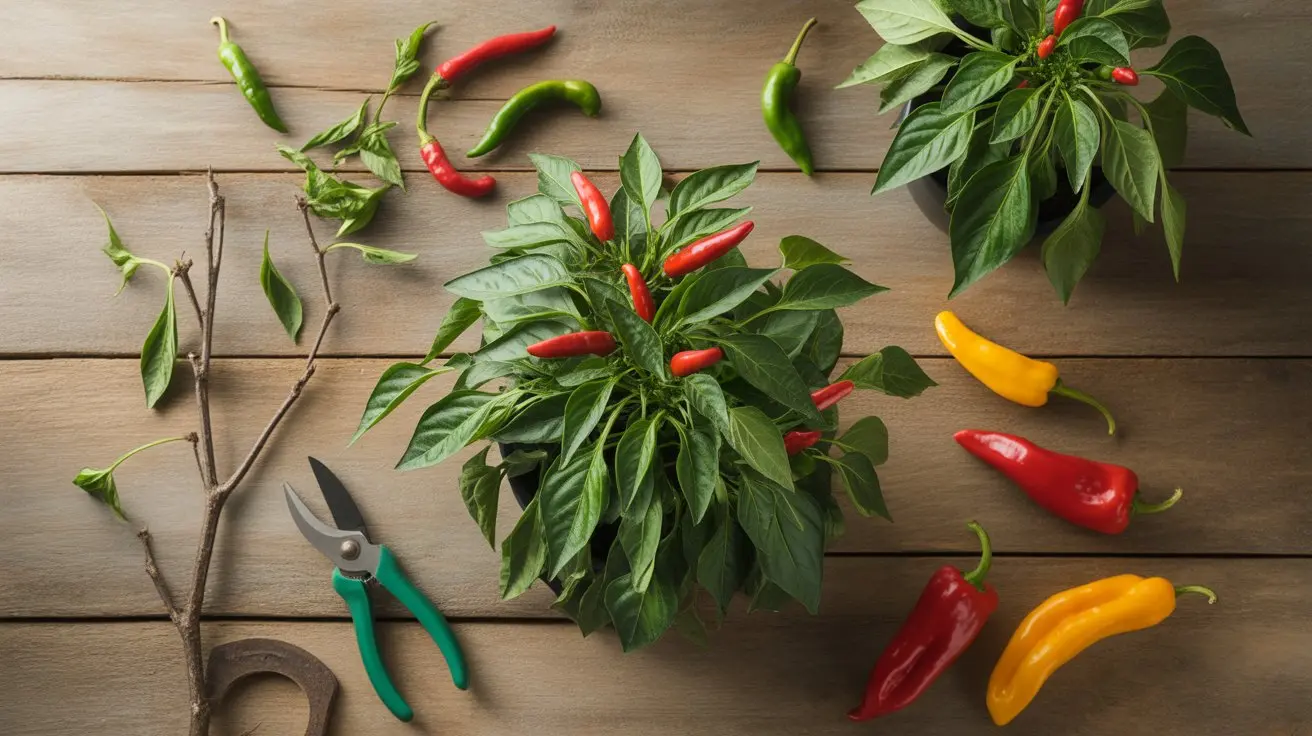
How to Prune Pepper Plants for More Fruit
Prune pepper plants to increase yield. We cover topping, removing suckers, flower pinching, and when NOT to prune. Find your perfect heat level.

Why Pruning Pepper Plants Actually Works
Pepper plants are not trees. They do not need heavy pruning to stay healthy, and most gardeners either skip it entirely or overdo it. The truth sits in the middle: strategic pruning redirects the plant's energy from foliage and structure into fruit production.
Left completely unpruned, a pepper plant will grow a sprawling canopy that shades its own lower branches, set more flowers than it can ripen before frost, and spend weeks building woody stems instead of filling pods. A few targeted cuts change that equation significantly.
The Y-Node: Where Every Pruning Decision Starts
Look at the main stem of any pepper plant and find where it first forks into two branches. That fork is called the Y-node, and it is the anatomical reference point for almost every pruning technique covered here.
Below the Y-node, the plant is all stem and root energy. Above it, the branching structure that produces fruit begins. Understanding this helps you make cuts that work with the plant's growth pattern rather than against it.
Plants like the compact ornamental hot pepper with dense upright pods have a naturally tight branching structure above the Y-node, which means less pruning is needed. Larger-fruited varieties tend to sprawl more and benefit from heavier shaping.
Topping: The High-Impact Cut
Topping means cutting the growing tip off the main stem, usually when the plant is 8-12 inches tall and before it has branched significantly. This forces lateral growth, turning one stem into two or four, which means more fruiting nodes overall.
The timing matters more than the technique. Top too early and the plant has not built enough root mass to support aggressive branching. Top too late and you are cutting off branches that are already setting flowers.
A good rule: top when the plant has 4-6 true leaves and the stem is pencil-thick. Make the cut just above a leaf node with clean, sharp scissors. The plant will push new growth from the nodes below the cut within 7-10 days.
Topping is especially effective for varieties you are growing in containers, where root space is limited and a compact, bushy shape keeps the plant manageable through the whole season.
Removing Suckers and Crossing Branches
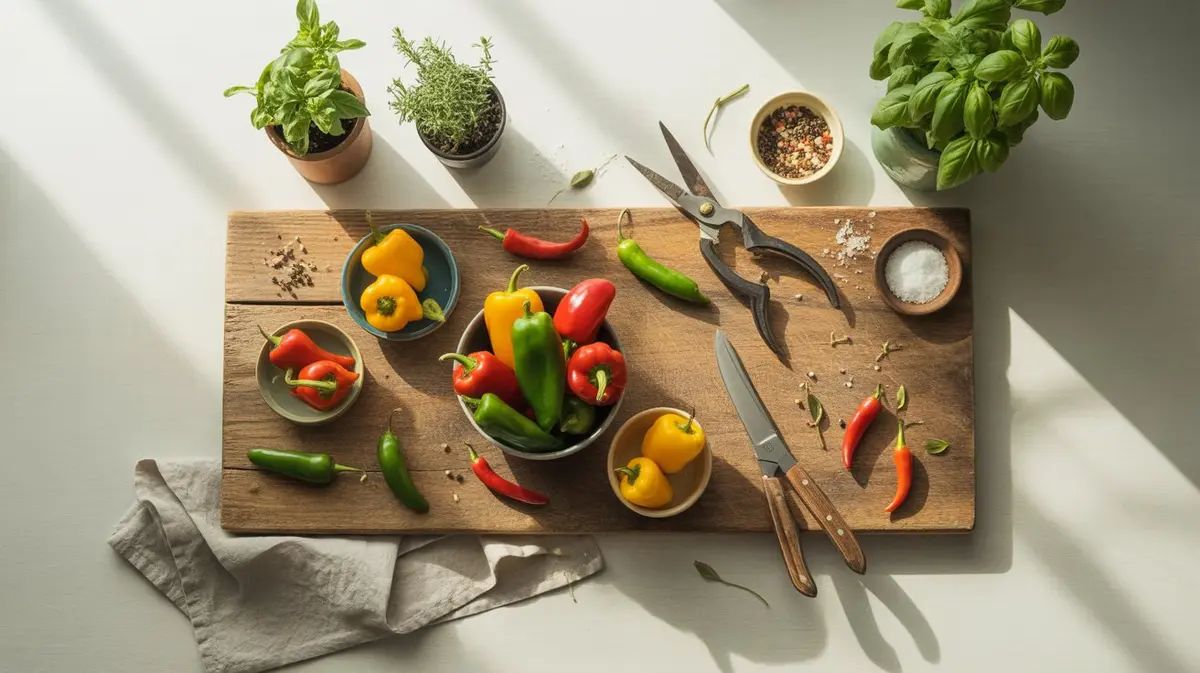
Pinch suckers off with your fingers when they are small - under an inch - so the wound closes fast and the plant does not spend energy healing a larger cut. Once they get woody, use scissors or a small pruning knife.
Crossing branches are a separate issue. When two branches rub against each other, they create abrasion wounds that invite fungal infection. Remove the weaker of the two crossing branches at its base. This also opens up airflow through the canopy, which reduces the humidity that causes powdery mildew and bacterial spot.
Varieties like the Fresno's medium-heat fruity profile tend to produce vigorous lateral growth that benefits from this kind of thinning mid-season.
Flower Pinching: Controversial but Effective
Pinching off the first flush of flowers is one of the most debated techniques in pepper growing. The logic is straightforward: a young plant that sets fruit immediately will stall its vegetative growth, resulting in a smaller plant with fewer total fruiting sites.
By removing the first 2-4 flower clusters on seedlings transplanted into the garden, you allow the plant to build a larger root system and more branching before committing energy to fruit. The result is typically a bigger plant that produces more total fruit by end of season.
This works best in climates with a long growing season. If your frost-free window is under 120 days, flower pinching may cost you more than it gains. In that case, let the plant set fruit as soon as it wants to.
The waxy-skinned, mild-to-medium heat wax pepper is a good example of a variety where flower pinching pays off - it is a vigorous grower that will produce heavily if given time to establish.
Late-Season Pruning: Setting Up the Final Push
About 4-6 weeks before your first expected frost, take a different approach to pruning. Instead of encouraging new growth, the goal shifts to forcing the plant to ripen existing fruit before cold arrives.
This is sometimes called terminal pruning. Remove all new flower buds and any very small fruits that will not have time to mature. Cut back the growing tips of branches to stop the plant from putting energy into new vegetative growth.
What you are left with is a plant focused entirely on ripening the fruit already on it. This can add 2-3 weeks of effective ripening time, which matters enormously for slower-ripening superhot varieties. The ghost pepper variant with pale cream-colored pods can take 120+ days to fully ripen, making late-season pruning nearly essential in northern gardens.
When NOT to Prune
Pruning at the wrong time does real damage. Here are the situations where you should put the scissors down.
During heat stress: When temperatures push above 95°F, pepper plants are already under physiological stress. Pruning adds another stress layer, and the plant may drop flowers and fruit in response. Wait for cooler weather.
After transplant shock: Give newly transplanted seedlings at least two weeks to establish before making any cuts. The root system needs to anchor first.
When the plant is diseased: If you see signs of bacterial wilt, mosaic virus, or severe fungal infection, pruning spreads the problem. Treat the disease first or remove the plant entirely.
In very short seasons: If you are growing a slow-maturing variety in a short-season climate, every leaf is doing photosynthetic work you cannot afford to lose. Minimal pruning only.
Tools, Sanitation, and Technique
Dull tools crush plant tissue instead of cutting it cleanly. Crushed tissue takes longer to heal and creates a larger entry point for pathogens. Use sharp bypass pruners or scissors for any cut larger than a sucker pinch.
Sanitation matters more than most gardeners realize. Wipe blades with isopropyl alcohol between plants - 70% concentration works fine. If one plant has a disease you have not identified yet, a contaminated blade spreads it to every plant you touch afterward.
Cut at a slight angle so water sheds off the wound rather than pooling. Make cuts just above a node or branch junction, not in the middle of a stem section where the stub will die back and rot.
Pruning by Pepper Type
Not all peppers respond to pruning the same way. Matching your technique to the variety's growth habit gets better results than applying one approach to everything.
Compact ornamentals like the dense, fiery ornamental pod variety rarely need more than sucker removal. Their natural growth habit is already tight and productive.
Medium-heat market peppers like the cayenne-style hot pepper from South Carolina breeding benefit from topping and moderate branch thinning. They are vigorous enough to recover quickly from cuts.
Novelty and striped varieties like the visually striking sweet-to-mild striped pod often have unpredictable branching patterns. Focus on airflow and sucker removal rather than heavy structural pruning.
Superhots take the longest to mature and benefit most from late-season terminal pruning. Their long ripening windows mean every day of growing season counts.
Integrating Pruning with Your Overall Growing Plan
Pruning does not exist in isolation. It works best as part of a broader growing strategy that includes proper step-by-step indoor starting and transplant timing so plants enter the garden already at the right size for early pruning decisions.
Soil nutrition affects how well plants respond to cuts. A plant with adequate phosphorus and calcium heals pruning wounds faster and pushes new growth more vigorously. A nitrogen-deficient plant will stall after topping instead of branching out.
Watering consistency matters too. Irregular watering causes blossom end rot and flower drop regardless of how well you prune. Keep soil moisture even - not waterlogged, not bone dry - through the main fruiting period.
If you are growing across multiple hot-tier varieties alongside milder types, stagger your pruning schedule by variety. Superhots need topping earlier because their season is longer. Fast-maturing sweet peppers can be topped later and still produce well.
For gardeners exploring the full spectrum from mild-end bell-type peppers up through the extreme end of the Scoville scale, pruning habits should shift with heat level - superhots almost always need more intervention than mild varieties simply because of how long they take to ripen.
Common Mistakes and How to Avoid Them
The most common mistake is removing too much foliage at once. Pepper plants can handle losing about 20-30% of their leaf area at a single pruning session. More than that triggers a stress response that slows fruit development rather than accelerating it.
Second most common: pruning at the wrong growth stage. Topping a plant that is already flowering sends mixed signals and can cause the plant to stall for two weeks while it figures out what to do next. Top before flowers appear.
Neglecting the follow-up is another issue. After topping, the plant needs consistent water and fertilizer to push the new lateral growth you are trying to encourage. A topped plant that gets drought-stressed will not branch the way you want.
Finally, do not prune based on calendar dates alone. Watch the plant. A pepper that is already perfectly bushy and producing well does not need topping just because it is week 6 of the season. Prune in response to what the plant is actually doing, not what a schedule says.
Frequently Asked Questions
-
Top pepper plants when they are 8-12 inches tall, have 4-6 true leaves, and the main stem is pencil-thick. This is typically 2-3 weeks before transplanting outdoors, or shortly after if you skipped it indoors.
-
Yes, in long-season climates. Removing the first 2-4 flower clusters lets the plant build more root mass and branching before setting fruit, which results in more fruiting sites overall. In short-season gardens under 120 frost-free days, skip it.
-
Suckers emerge from the crotch between the main stem and a branch, almost always below the Y-node. They are thin, soft, and grow at an angle between two existing stems. Remove them when under an inch long by pinching with your fingers.
-
Container plants benefit more from topping and bushy shaping because root space is limited and a compact form stays manageable. In-ground plants have more room to sprawl, so pruning is more about airflow and late-season ripening than shape control.
-
Terminal pruning means removing all new flower buds and growing tips 4-6 weeks before first frost, forcing the plant to ripen existing fruit instead of setting new pods. It is especially useful for slow-maturing superhot varieties in northern gardens.