Acid
brightens rich or flat food


Pepperoncini juice is a seasoned vinegar brine that can brighten dressings, salads, braises, beans, and sauces. Start with one teaspoon for four servings, then adjust salt only after tasting.
Pepperoncini juice is the pickling brine left around jarred pepperoncini. It can bring vinegar, salt, mild pepper flavor, and any seasonings named on the label in one pour.
That combination makes the brine useful when a dish needs both brightness and seasoning. It is not a neutral substitute for water, and it is not automatically identical from one brand to another.
Read the ingredient statement before cooking with the liquid. Vinegar, water, and salt are common, but a jar may also contain calcium chloride, sugar, garlic, herbs, preservatives, or artificial color.
Taste a clean spoonful before choosing the amount. The useful question is whether the current dish needs more acid, more salt, or both.
Start with one teaspoon for four servings when you are finishing a soup, bean dish, or pan sauce. Stir, taste, and add another teaspoon only if the food still needs brightness.
The amounts below are KnowThePepper editorial starting points. Your jar's label, salinity, and the food's existing seasoning should control the final dose.
| Cooking job | Starting amount | What to adjust first |
|---|---|---|
| Finish soup, beans, or stew | 1 teaspoon per 4 servings | Acid, then salt |
| Vinaigrette | 1 tablespoon brine to 3 tablespoons oil | Oil for sharpness |
| Potato or pasta salad | 1 tablespoon per pound of cooked base | Mayonnaise and salt |
| Pan sauce or gravy | 1 teaspoon per cup | Thickness after simmering |
| Marinade | 2 tablespoons per pound of meat | Other salt in the mixture |
Measure into a small bowl rather than pouring from the jar over the pot. That prevents peppers from falling out, keeps steam away from the jar, and makes an accidental quarter-cup pour less likely.
The cleanest uses replace part of another acidic ingredient instead of adding an entirely new flavor direction. Pepperoncini brine can stand in for part of the vinegar or lemon juice in a dressing, slaw, sauce, or spread.
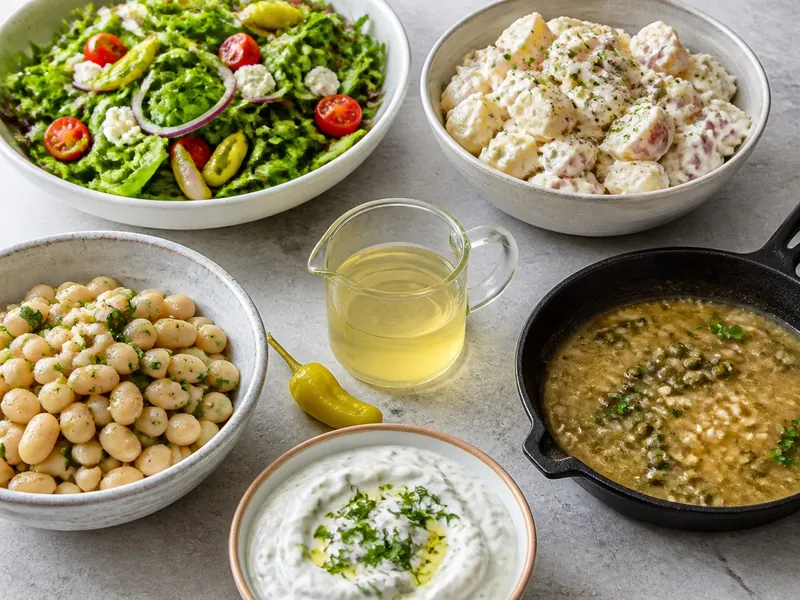
Shake one part brine with three parts olive oil for a quick starting vinaigrette, then add mustard, garlic, or herbs only if the salad needs them. A sweetener can soften a sharp jar, but taste first because some brands already contain sugar.
Potato salad, pasta salad, tuna salad, and chickpea salad benefit when the brine seasons the cooked base before mayonnaise is added. This spreads tang through the food instead of leaving all the acidity in the dressing.
Stir a teaspoon into a half-cup of mayonnaise, yogurt dip, hummus, or cream cheese. Rest the mixture for 10 minutes, then adjust its salt and thickness.
A few drops can wake up a rich sandwich spread without making the bread wet. Apply the seasoned spread rather than pouring brine directly onto the sandwich.
Cooking time changes the result. Add early for integration, add late for a brighter edge, and reduce carefully because salt stays behind as water evaporates.
For pot roast, pork shoulder, or chicken thighs, use the brine as part of the braising liquid rather than the entire liquid base. Stock, water, tomato, or another unsalted ingredient gives the sauce enough volume to reduce without becoming aggressively salty.
For a pan sauce, deglaze with one or two teaspoons after browning the food, then add stock. A final half-teaspoon can restore brightness after butter or cream rounds the sauce.
Beans, lentils, and tomato soup often need acid near the end because long cooking can make their flavors seem heavy. Add one teaspoon, stir through the full pot, and compare before adding salt.
Barbecue sauce and vinegar mops can accept pepperoncini brine when their existing acid and salt are reduced. Do not make the swap by volume until you have compared both liquids.
Pepperoncini brine can season chicken, pork, or beef, but it must stay refrigerated during marination. USDA FSIS also warns that too much vinegar or hot sauce can make poultry stringy and tough, so more time and more acid do not guarantee better texture.
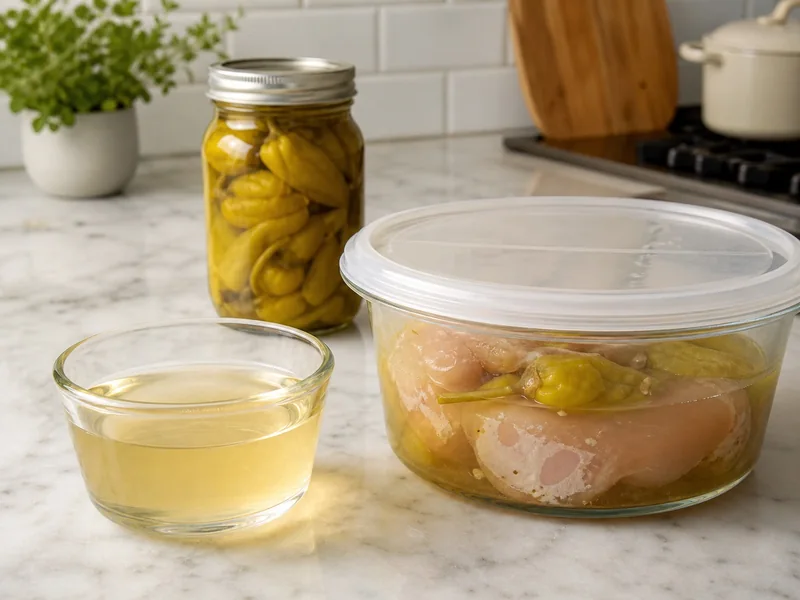
Pour the amount needed for the raw meat into a separate container. If you want brine for a finishing sauce, reserve that clean portion before it touches raw meat.
Marinate in a covered food-safe container in the refrigerator, not on the counter. Keep the original jar clean so the remaining liquid can still be used for ready-to-eat foods.
Pat meat dry before browning so the wet surface does not steam. Account for the brine's salt before adding a salty rub, seasoning packet, cheese, or reduced sauce.
The closest substitute depends on whether you need seasoned acid, pepper aroma, salt, or pickled flavor. Plain vinegar can replace acidity, while another pepper brine can replace more of the complete profile.
| Alternative | What it supplies | What to correct |
|---|---|---|
| Banana pepper brine | Mild pepper, vinegar, and salt | Compare sweetness and label ingredients |
| Dill pickle brine | Vinegar, salt, dill, and garlic | Expect a stronger cucumber and herb direction |
| Olive brine | Salty savory liquid | Add acid separately if the dish needs brightness |
| White wine vinegar | Clean acidity | Add salt and pepper flavor separately |
| Lemon juice | Fresh citrus acidity | Expect no pickled note and less salt |
Begin below the original amount when changing brines because salinity can differ sharply. Taste after the liquid is distributed through the whole dish rather than judging a drop by itself.
Leftover pepperoncini brine is a flavor ingredient, not a tested home-canning formula. The National Center for Home Food Preservation explains that vegetables alter a pickling solution's acidity as they soak, which leaves reused liquid with an unknown preservation strength.
Do not top the jar with fresh vegetables and store it at room temperature. Do not use leftover brine to improvise shelf-stable pickles, salsa, relish, or canned vegetables.
Refrigerator flavoring is a narrower job than preservation. NCHFP advises treating vegetables flavored in leftover brine like a fresh refrigerated salad and consuming them within several days rather than assuming the original product's shelf life transfers.
Pickled eggs need a tested refrigerated recipe and constant refrigeration. NCHFP states that home-pickled eggs should not remain at room temperature beyond serving time, so a nearly empty pepperoncini jar is not a safe shortcut.
Follow the jar label after opening and keep the brine refrigerated with the lid closed. Use a clean spoon or pour into a separate cup so crumbs, raw-meat juices, and used utensils do not enter the original container.
Keep a useful portion only while the opened product remains within its labeled storage direction. There is no honest universal timeline because commercial formulas, preservatives, packaging, and handling differ.
Discard the liquid if the lid swells or leaks, mold appears, the brine develops an unexpected odor, or raw-food cross-contact reaches the jar. Do not taste a questionable batch to decide whether it is safe.
Freezing small portions can preserve a cooking ingredient when the label allows it, but texture changes do not matter much in a future braise or sauce. Label the container so the salty acidic cubes are never mistaken for stock or citrus juice.