Pepper Plant Propagation: Rooting Cuttings in Water or an Airy Medium
A pepper cutting can clone a healthy plant whose fruit, growth, or appearance you want to preserve. Take a clean nonflowering shoot below a node, remove lower leaves, keep a small top canopy, and root the bare nodes in clean water or an airy moist medium.
High humidity slows water loss before roots form, but saturated media and stagnant air encourage rot. Pot up only after roots branch or hold the medium and the cutting produces stable new growth, then reduce humidity and increase light gradually.
Why propagate peppers from cuttings instead of seed?
A stem cutting produces a genetic clone of its donor, which makes propagation useful when one pepper has a fruit shape, color, heat level, or growth habit worth preserving. Seed starts a new individual and may not reproduce a hybrid or cross-pollinated parent exactly.
| Your goal | Better route | Main tradeoff |
|---|---|---|
| Preserve one known plant | Stem cutting | Copies both desirable traits and hidden health problems |
| Grow many plants cheaply | Seed | Seedlings take longer to reach donor size |
| Create genetic variety | Seed | Offspring may differ from the parent |
| Back up a rare plant before winter | Cutting | Rooting needs warm protected space |
Cloning does not clean a plant. Do not take material from a donor with mosaic-like distortion, unexplained wilt, stem lesions, root disease, or an uncontrolled insect infestation because the cutting can carry the same problem indoors.
A cutting also does not save time in every situation. A vigorous seedling with established roots may outgrow a stressed clone, while the cutting earns its effort when identity matters more than producing the largest number of plants.
Label the cultivar and cutting date before the stems look alike. If the donor is an unnamed plant, describe the fruit and source rather than assigning a cultivar name from appearance.
Keep seed when long-term storage, broad genetic diversity, or many plants is the real goal.
A rooted clone occupies living space continuously and can be lost to the same cold, pest, or watering failure as its donor.
Propagation is especially useful for a productive hybrid, an ornamental selection, or a plant whose seed history is uncertain.
Keep more than one cutting when the donor is genuinely hard to replace because a single stem is still an experiment, not a backup until it roots.
How do you take a pepper cutting?
Choose a healthy side shoot that is flexible but not limp, with several nodes and no fruit. Avoid the softest flowering tip and old cracked woody growth when a medium young shoot is available.
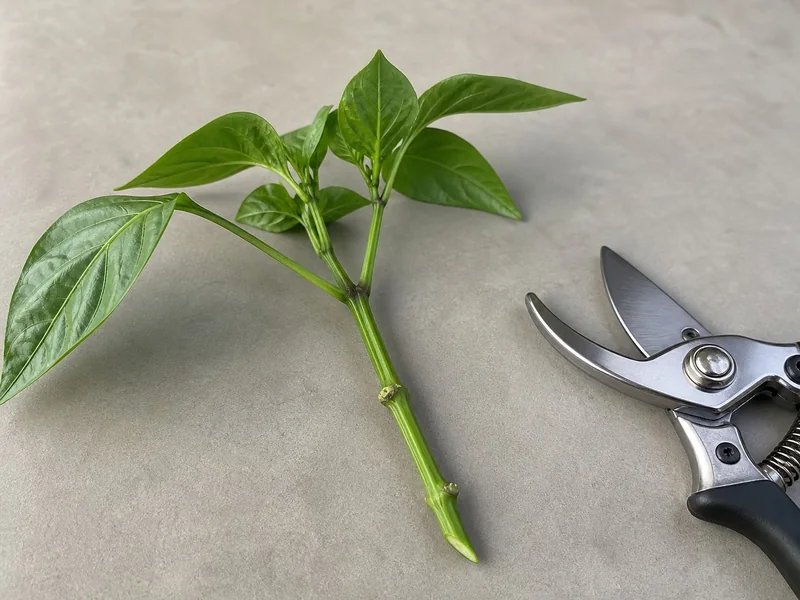
- Prepare clean pruners, labels, water or moist medium, and the humidity cover before cutting.
- Inspect both leaf surfaces and the stem for pests or lesions.
- Cut just below a lower node with one clean motion.
- Remove flowers, buds, fruit, and leaves from the lower nodes.
- Keep a small group of healthy top leaves, trimming only very large blades when water loss is severe.
- Place the cutting into its rooting setup immediately and label it.
Research on aeroponic cloning of six Capsicum species used clean blades and cuts below a node, confirming that peppers can regenerate roots from stem material. The study also found that response differed among species, so one cutting method cannot promise identical timing for every pepper.
Nodes matter because they organize buds and tissues that can participate in new growth. Bury or submerge at least one bare lower node while keeping leaves above the water or medium.
Do not leave a full fruiting canopy on a stem with no roots. Every retained leaf loses water, while flowers and fruit divert resources before the cutting can support them.
If you are taking several clones, use a fresh clean cut for each one and avoid leaving stems on a hot bench. Shade the prepared material and keep it moving into the rooting setup.
Take cuttings during the cooler part of the day when the donor is hydrated, then return the donor to shade if pruning exposed tender inner leaves.
Never remove so much growth that preserving a clone weakens the original plant you meant to save.
Between donors, wipe debris from the blades and disinfect them with a suitable tool disinfectant.
Keep labels with individual vessels so a rotting cutting can be removed without mixing cultivars or sharing contaminated water.
Should you root pepper cuttings in water or a medium?
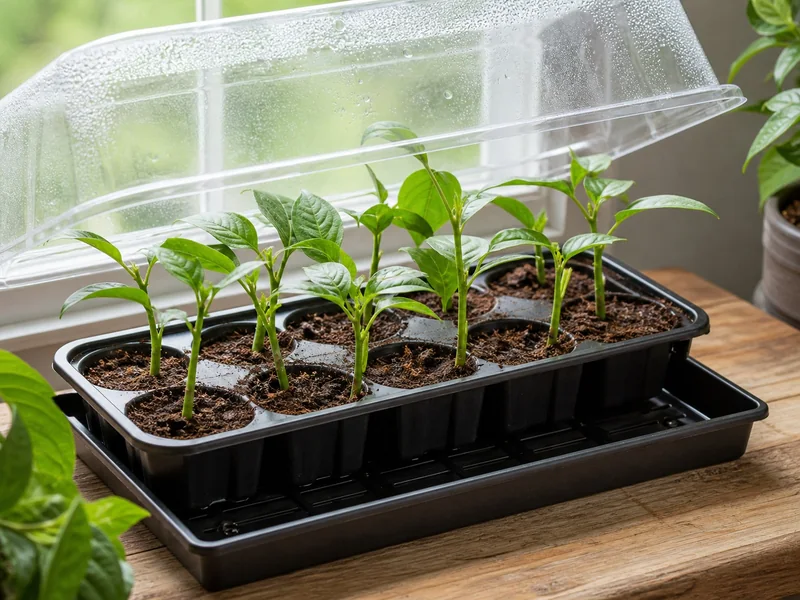
Both clean water and an airy propagation medium can root pepper cuttings. Water makes root emergence visible, while perlite, vermiculite, coir, or a light seed-starting mix lets roots develop in an oxygen-rich material closer to their next pot.
| Method | Useful advantage | Main risk | Daily evidence |
|---|---|---|---|
| Clean water | You can see the stem and roots | Low oxygen, algae, and soft water-adapted roots | Clear water and a firm pale stem base |
| Airy moist medium | Less root disturbance at pot-up | Hidden saturation or drying | Lightly moist mix and an upright cutting |
| Propagation plug | Consistent small root volume | The plug can stay wet inside | Moist weight without standing water |
For water rooting, keep the bare lower node submerged and every leaf above the waterline. Replace cloudy water, clean the vessel, and recut above soft brown tissue if rot has not moved far up the stem.
For medium rooting, pre-moisten the mix so it holds together lightly without dripping, make a hole, insert the cutting, and firm gently. A container with open drainage is essential because a humidity dome does not justify saturated roots.
Published sweet-pepper research rooted cuttings in several media and found improved rooting with indolebutyric acid treatment. Rooting hormone is optional for a home attempt, and more product is not better because an excessive concentration can damage tissue.
Cover the setup with a clear dome or loose transparent bag that does not touch the leaves. Give bright indirect light and warmth, but keep it out of direct sun because a sealed cover can heat rapidly.
Condensation proves that water is cycling inside the cover, not that the medium needs more water. Vent briefly when water coats every surface, remove fallen leaves, and keep enough air exchange to prevent a stale wet chamber.
Use a small rooting volume rather than a large pot that stays wet beyond the cutting.
The medium should touch the stem and still contain air spaces, which is why dense garden soil and a water-filled saucer make poor propagation conditions.
Check the stem at the medium line as well as the leaves.
A cutting can remain green for a time while its buried base softens, so a firm clean stem and new root or shoot growth are stronger evidence than leaf color alone.
When is a rooted cutting ready to pot up?
A cutting is ready to advance when new growth remains firm, roots have branched rather than showing one tiny nub, and a medium-rooted stem resists a very gentle tug. Calendar days alone are unreliable because donor condition, species, temperature, and method change rooting speed.
Raise humidity temporarily, reduce leaf area if the canopy is large, and verify that the stem base remains firm. Do not flood already wet medium.
Remove the cutting, trim back to clean firm tissue with a sterile blade, replace contaminated water or medium, and restart only if healthy nodes remain.
Hold steady warmth and indirect light, then wait. Pulling the cutting repeatedly to inspect it can break new root initials.
Move a water-rooted cutting into a small pot of moist airy mix once it has several branching roots, arranging them without folding them sharply. Keep humidity moderately high for the first transition because water roots have not yet adapted fully to the spaces in potting mix.
Open the dome a little longer each day and watch whether leaves remain upright. If the plant collapses during a longer opening, restore humidity and make the next reduction smaller rather than abandoning acclimation.
Increase light after the plant tolerates ordinary room humidity, beginning with gentle morning sun or a moderate grow light. A clone moved straight from a dome into hot outdoor sun can scorch before its young roots replace water fast enough.
Delay full-strength fertilizer until roots occupy the small pot and new leaves expand. Remove early flowers so the plant builds roots and shoots before carrying fruit.
Before combining the clone with other plants, inspect it again for aphids, mites, whiteflies, and disease symptoms. A successful root system proves propagation worked, but it does not prove the plant is safe to add to a collection.